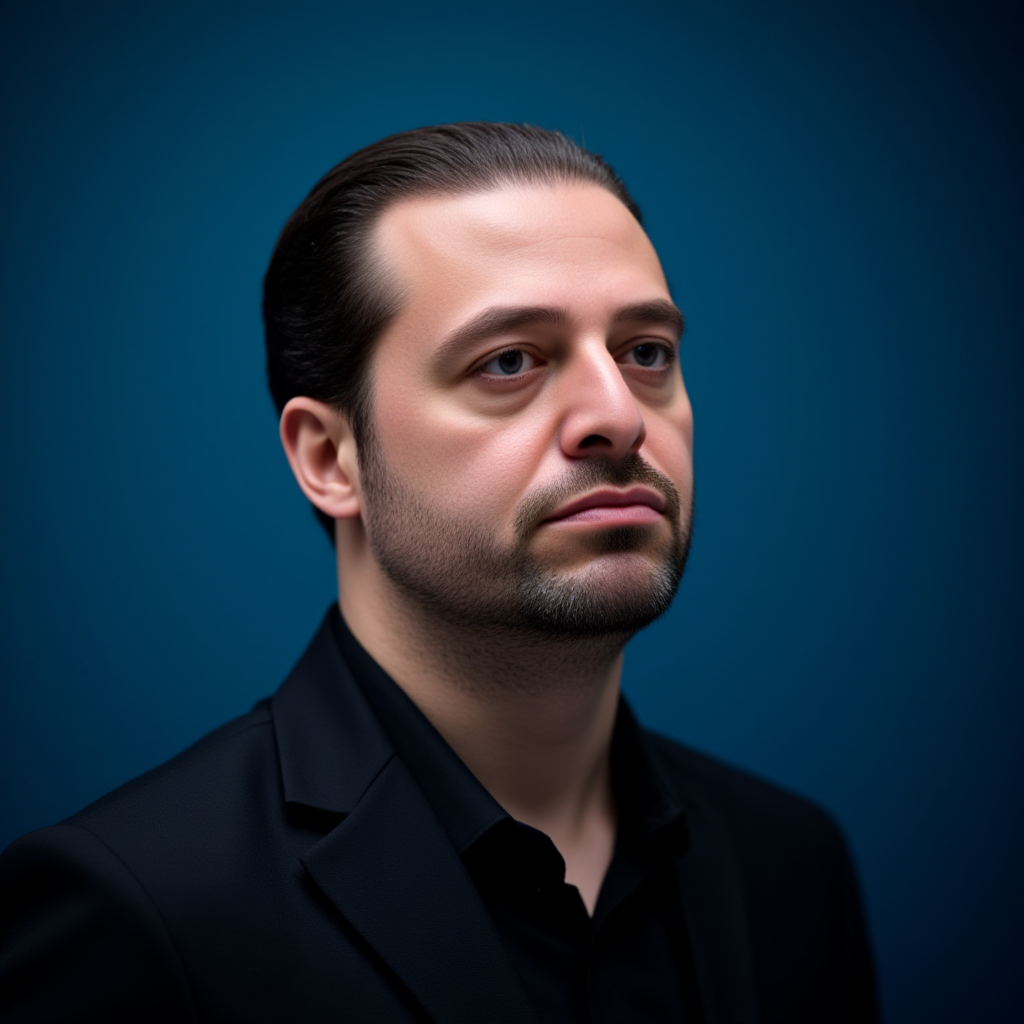
Saad Hariri scores 83.2% (±10.2%) based on 52 verifiable claims from their last 1,000 tweets. 27 true, 25 somewhat misleading, 0 misleading, 0 false. 22 claims are pending verification.
27
25
0
0
The Iranian attack on several Gulf Arab countries is an unacceptable aggression and poses a serious threat to Arab national security.
The claim accurately describes the situation as of February 28, 2026. On that date, Iran launched missile and drone attacks targeting several Gulf Arab countries, including Bahrain, Kuwait, Qatar, and the United Arab Emirates, in retaliation for joint U.S.-Israeli strikes on Iran. These attacks were directed at U.S. military assets within these countries but also resulted in damage to civilian infrastructure and posed significant threats to regional security. The Gulf Cooperation Council (GCC) condemned Iran's actions, emphasizing the serious threat to Arab national security. Therefore, the claim is factual and presented fairly.
The Taif Agreement is not being implemented and our crises are not ending.
The Taif Agreement, signed in 1989 to end Lebanon's civil war, has not been fully implemented. Key provisions, such as expanded administrative decentralization, balanced regional development, and the disarmament of all militias, remain unfulfilled. This incomplete implementation has contributed to ongoing political and security crises in Lebanon. Prime Minister Nawaf Salam emphasized in July 2025 that restoring state authority requires the full application of the Taif Agreement, highlighting the need to address these unimplemented provisions. Therefore, the claim that the Taif Agreement is not being implemented and that crises persist is accurate.
Rafik Hariri was the main contributor to stopping the civil war and was the architect of the Taif Agreement, which should be fully implemented.
Rafik Hariri played a significant role in the development of the Taif Agreement, which was instrumental in ending the Lebanese Civil War. However, attributing him as the 'main contributor' and 'architect' of the agreement overlooks the collaborative efforts of various Lebanese political figures, notably Parliament Speaker Hussein El-Husseini, who is often credited as the father of the agreement. Therefore, while Hariri's contributions were substantial, the claim exaggerates his role by not acknowledging the collective nature of the peace process.
Today marks a historic recognition of the State of Palestine.
On September 22, 2025, several countries, including France, the United Kingdom, Canada, Australia, Portugal, and Belgium, formally recognized the State of Palestine. This collective action marked a significant milestone in international recognition of Palestinian statehood. ([aljazeera.com](https://www.aljazeera.com/news/2025/9/23/which-are-the-150-countries-that-have-recognised-palestine-as-of-2025?utm_source=openai)) Therefore, the claim that September 23, 2025, marks a historic recognition of the State of Palestine is accurate.
Lebanon is still suffering from pointless wars, ongoing crises, and daily Israeli attacks.
The claim that Lebanon is suffering from 'pointless wars' and 'ongoing crises' is accurate, reflecting the country's prolonged political and economic instability. However, the assertion of 'daily Israeli attacks' is an exaggeration. While there have been multiple Israeli military operations targeting Hezbollah in Lebanon, these have not occurred on a daily basis. For instance, between April 7 and April 13, 2025, the Israel Defense Forces conducted several operations, but not every day saw an attack. Therefore, while the core of the claim holds, the frequency of Israeli attacks is overstated.
The main suspect in the assassination of Kamel Jumblatt has been arrested after years of protection and rewards.
The claim states that the main suspect in the assassination of Kamel Jumblatt has been arrested after years of protection and rewards. This is accurate. In March 2025, Syrian authorities arrested Ibrahim Huweija, the former head of air force intelligence, who was accused of orchestrating numerous assassinations, including that of Lebanese politician Kamel Jumblatt in 1977. Huweija had been a prominent figure in Syria's intelligence apparatus and was considered a key suspect in Jumblatt's murder. His arrest marked a significant development after decades of alleged protection under the previous regime.
The country has faced significant crises over the past twenty years, and despite taking responsibility and resigning, the crises have persisted and worsened.
Over the past two decades, Lebanon has experienced significant crises, including political instability, economic collapse, and social unrest. Despite various political leaders resigning and stepping down, these crises have persisted and, in many cases, worsened. For instance, the resignation of Prime Minister Hassan Diab in August 2020 following the Beirut port explosion did not alleviate the country's economic downturn or political paralysis. Similarly, the departure of President Michel Aoun in October 2022 left Lebanon without a successor, deepening the political vacuum and economic challenges. These examples illustrate that political resignations have not led to the resolution of Lebanon's ongoing crises.
We support the will of the Syrians and the stability and reconstruction of Syria, and we want the best relations based on mutual respect for sovereignty and independence.
The claim expresses support for the will of the Syrian people, stability, reconstruction, and mutual respect for sovereignty and independence. While these are commendable goals, the situation in Syria remains complex. Despite the fall of Bashar al-Assad's regime in December 2024 and the establishment of a transitional government under President Ahmad al-Sharaa, challenges persist. The country faces significant economic devastation, with the World Bank estimating the economy at around $21 billion—a decline of 83% since 2010—and reconstruction costs exceeding $250 billion. Additionally, internal divisions, sporadic violence, and external influences continue to threaten stability. Therefore, while the claim aligns with stated intentions, it may oversimplify the current realities on the ground.
Twenty years ago, the people demanded justice and expelled the criminal regime of Bashar al-Assad from Lebanon.
The claim states that 20 years ago, the Lebanese people demanded justice and expelled Bashar al-Assad's regime from Lebanon. While it's true that in 2005, widespread protests following the assassination of former Prime Minister Rafik Hariri led to significant pressure on Syria, resulting in the withdrawal of Syrian troops from Lebanon on April 26, 2005, the framing of the claim oversimplifies the situation. The withdrawal was influenced by a combination of international pressure, notably UN Security Council Resolution 1559, and internal Lebanese protests. Therefore, attributing the expulsion solely to the people's demands without acknowledging the broader geopolitical context is somewhat misleading.
There is a ceasefire agreement that has stopped Israeli military actions against the Palestinian people.
The claim states that a ceasefire agreement has stopped Israeli military actions against the Palestinian people. While a ceasefire was indeed agreed upon on January 15, 2025, and took effect on January 19, 2025, reports indicate that Israel committed multiple violations during the ceasefire period. For instance, as of February 12, 2025, Gaza's government media office reported 265 ceasefire violations by Israel, resulting in 118 Palestinian deaths. Therefore, while the ceasefire was intended to halt military actions, the reality was more complex, with continued incidents of violence.
The Syrian people have come out to bury an era and open a new one, celebrating freedom after being liberated from oppression.
The claim that 'The Syrian people have come out to bury an era and open a new one, celebrating freedom after being liberated from oppression' is accurate. In early December 2024, Syrian rebel forces successfully overthrew the Assad regime, leading to widespread celebrations across the country. Reports confirm that President Bashar al-Assad fled to Moscow, and cities like Damascus and Homs were liberated, marking the end of decades-long authoritarian rule. Syrians took to the streets, expressing joy and hope for a new era of freedom.
The Saudi Ministry of Foreign Affairs announced directives to provide medical and relief assistance to address critical conditions in Lebanon.
The claim that the Saudi Ministry of Foreign Affairs announced directives to provide medical and relief assistance to address critical conditions in Lebanon is accurate. On September 29, 2024, the Saudi Foreign Ministry issued a statement expressing concern over developments in Lebanon and emphasized the need to preserve Lebanon's sovereignty and territorial integrity. The statement also affirmed Saudi Arabia's solidarity with the Lebanese people and announced directives from the Kingdom's leadership to provide medical and relief aid to support them during these critical circumstances. This information is corroborated by multiple reputable sources, including Anadolu Agency and Arab News.
The UAE is providing $100 million in urgent relief aid to the Lebanese people.
The claim that the UAE is providing $100 million in urgent relief aid to the Lebanese people is accurate. On September 30, 2024, UAE President Sheikh Mohamed bin Zayed Al Nahyan directed the delivery of this aid package to support Lebanon during its current challenges. This initiative underscores the UAE's commitment to assisting the Lebanese people.
Netanyahu has rejected the two-state solution since the Arab initiative in Beirut over 20 years ago.
While Prime Minister Benjamin Netanyahu has expressed reservations about the 2002 Arab Peace Initiative, he has not outright rejected the two-state solution since then. In 2009, he endorsed the concept of a demilitarized Palestinian state alongside Israel. However, his support has been conditional, emphasizing Israel's security concerns and rejecting specific terms of the Arab initiative, such as the return to 1967 borders and the right of return for Palestinian refugees. Therefore, the claim that Netanyahu has rejected the two-state solution since the 2002 Arab initiative is somewhat misleading, as it overlooks his nuanced and conditional support over the years.
Saad Hariri has announced and reiterated that he is suspending his work and the work of the Future Movement political party, and will not intervene in any political events or projects.
On January 24, 2022, former Lebanese Prime Minister Saad Hariri announced that he was suspending his political activities and that of his party, the Future Movement. He stated he would not run in the upcoming parliamentary elections and called on his party to do the same. This decision was reiterated multiple times, emphasizing his withdrawal from political events and projects.
The appeals chamber of the international court unanimously imposed life sentences on two other members of Hezbollah, Hassan Merhi and Hussein Anisi, after the conviction of Salim Ayyash for the assassination of former Prime Minister Rafik Hariri and his companions.
The claim accurately states that the Appeals Chamber of the Special Tribunal for Lebanon unanimously imposed life sentences on two Hezbollah members, Hassan Merhi and Hussein Oneissi, for their roles in the assassination of former Prime Minister Rafik Hariri and others. However, it omits that these sentences were delivered in absentia, as both individuals remain at large and have not been apprehended. This missing context is significant, as it affects the enforceability of the sentences and the overall impact of the tribunal's decision.
Hezbollah is responsible for organizing and executing a crime and cannot escape the responsibility of handing over those convicted and enforcing the punishment.
The claim asserts that Hezbollah is responsible for organizing and executing a crime and must hand over those convicted to enforce the punishment. On June 16, 2022, the Special Tribunal for Lebanon sentenced two Hezbollah members, Hassan Habib Merhi and Hussein Hassan Oneissi, to life imprisonment for their roles in the 2005 assassination of former Lebanese Prime Minister Rafik Hariri. However, both individuals were tried in absentia and remain at large, as Hezbollah has refused to hand them over. While the convictions implicate individual Hezbollah members, the tribunal did not find evidence directly linking Hezbollah's leadership or Syria to the attack. Therefore, while the claim is directionally accurate regarding individual culpability, it overstates the organizational responsibility and omits the lack of direct evidence against Hezbollah's leadership.
A terrorist attack targeted a water lifting point in western Sinai, resulting in casualties among the Egyptian armed forces.
On May 7, 2022, a terrorist attack targeted a water lifting station in western Sinai, resulting in the deaths of 11 Egyptian military personnel, including an officer, and injuries to five others. The Egyptian military confirmed the incident, stating that a group of militants attacked the facility and were engaged by security forces. The Islamic State (ISIS) later claimed responsibility for the attack. This information is corroborated by multiple reputable sources, including Al Jazeera and Deutsche Welle.
The situation in Lebanon has become so dire that citizens are resorting to dangerous boats to escape the state.
The claim accurately reflects the dire situation in Lebanon, where citizens have resorted to dangerous sea journeys to escape the state's conditions. On April 23, 2022, an overloaded boat carrying around 60 people capsized off the coast of Tripoli, resulting in at least six deaths and numerous missing persons. This incident underscores the severe economic crisis and instability driving Lebanese citizens to undertake perilous escapes by sea.
Hezbollah is responsible for covering up a crime and protecting the criminals associated with it.
The claim that Hezbollah is responsible for covering up a crime and protecting the criminals associated with it is supported by multiple sources. The Special Tribunal for Lebanon convicted Hezbollah members Hussein Oneissi and Hassan Habib Merhi in absentia for their roles in the 2005 assassination of former Prime Minister Rafik Hariri. Despite these convictions, Hezbollah has refused to hand over the convicted individuals to authorities, effectively shielding them from justice. This refusal to cooperate with international judicial processes and protect its members from prosecution substantiates the claim.
Saad Hariri will not run for parliamentary elections and will not submit any nominations from the Future Movement party.
On January 24, 2022, Saad Hariri announced his withdrawal from Lebanese politics, stating he would not run in the upcoming parliamentary elections and that the Future Movement would not submit any nominations. This decision was widely reported and led to a significant shift in Lebanon's political landscape.
I am suspending my political activities and calling on my family in the Future Movement to do the same.
On January 24, 2022, Saad Hariri, Lebanon's former Prime Minister and leader of the Future Movement, announced his withdrawal from political life. He also called on members of his party to do the same, stating that neither he nor any members of his party would run in the upcoming parliamentary elections scheduled for May 2022. This announcement was widely reported by reputable news outlets, confirming the accuracy of the claim.
I was the only one who responded to the October 17, 2019 revolution by resigning my government and tried to change the way of working after the August 4 disaster in Beirut.
Saad Hariri resigned as Prime Minister on October 29, 2019, in response to the October 17 protests, making him the first to resign due to the revolution. After the August 4, 2020, Beirut explosion, Prime Minister Hassan Diab and his government resigned on August 10, 2020, amid public outrage over the disaster. Therefore, the claim that the speaker was the only one to resign in response to the October 17, 2019, revolution is accurate, but the assertion of being the only one to attempt change after the August 4 disaster overlooks Hassan Diab's resignation, which was a significant response to the explosion.
Preventing civil war in Lebanon required compromises, including various agreements and actions.
The claim accurately reflects historical events in Lebanon. Preventing civil war involved compromises such as the Doha Agreement, which resolved the 2008 political crisis, and other political actions like the election of Michel Aoun and changes to the electoral law. These actions were indeed part of efforts to maintain stability.
I succeeded in preventing civil war in Lebanon, but I did not achieve enough success in providing a better life for the Lebanese people.
Rafik Hariri played a significant role in Lebanon's post-civil war reconstruction and economic revival, notably through initiatives like the 'Horizon 2000' plan aimed at revitalizing Beirut. However, his tenure also faced criticism for neglecting broader social infrastructure and exacerbating economic inequalities, leading to rising national debt and dissatisfaction among lower-income groups. While he contributed to preventing a resurgence of civil war, the assertion that he did not achieve enough success in providing a better life for the Lebanese people is somewhat misleading, as his policies had both positive and negative impacts on the population's well-being.
The Houthi militias' attacks targeting the UAE indicate that the orders for these operations come from a state that harbors malice towards Arab countries and their people.
The claim suggests that the Houthi attacks on the UAE are directed by a state harboring malice towards Arab countries, implying Iranian involvement. While Iran has provided support to the Houthis, direct evidence of Iran ordering specific attacks on the UAE is not publicly available. Therefore, the claim is somewhat misleading as it presents an assertion without definitive proof.
Iranian drones targeted the capital of the UAE and carried out an open aggression against Arab security.
On January 17, 2022, Yemen's Houthi rebels claimed responsibility for a drone attack on Abu Dhabi, resulting in three civilian deaths and six injuries. While the Houthis have a history of using Iranian-designed weapons, and reports indicate that Iran has supplied advanced weapons to the Houthis, direct evidence confirming that the specific drones used in this attack were Iranian-made is lacking. Therefore, attributing the attack solely to "Iranian drones" without acknowledging the Houthis' role and the lack of direct evidence is somewhat misleading.
We condemn the aggression and demand an Arab stance to protect the Gulf and its security and people, and to stop Iranian expansion in our countries and communities.
The claim condemns aggression and calls for an Arab stance to protect the Gulf and halt Iranian expansion. While Iran has been involved in activities perceived as aggressive in the Gulf region, such as supporting proxy groups and engaging in maritime confrontations, the framing of Iran as solely responsible for regional instability lacks nuance. Other regional and international actors have also contributed to tensions. Therefore, the claim is somewhat misleading as it oversimplifies the complex dynamics of Gulf security.
Saudi Arabia and all Gulf countries have embraced Lebanese people and provided them with job opportunities and means for a decent living.
The claim that Saudi Arabia and Gulf countries have embraced Lebanese people and provided them with job opportunities and means for a decent living is partially accurate. Historically, a significant number of Lebanese have worked in Gulf countries, with estimates indicating around 500,000 Lebanese residing in the region, including approximately 300,000 in Saudi Arabia. These expatriates have contributed substantially to the Lebanese economy through remittances, sending between $5 and $7 billion annually. However, this relationship has faced challenges. For instance, in 2016, Gulf Cooperation Council (GCC) countries classified Hezbollah as a terrorist organization, leading to increased scrutiny and deportations of Lebanese individuals suspected of links to the group. Additionally, in 2021, Saudi Arabia imposed a ban on Lebanese imports, adversely affecting Lebanese workers. These incidents highlight that while Gulf countries have indeed provided opportunities to Lebanese workers, the relationship has been complex and subject to political tensions, which the claim overlooks.
Saudi Arabia does not threaten the state of Lebanon with its workers and residents who have been there for many years.
As of January 2022, there is no evidence that Saudi Arabia threatened Lebanon regarding its workers and residents who have been there for many years. While there have been instances of Saudi Arabia seeking the extradition of individuals from Lebanon, such as the case in August 2022 involving a Saudi national who threatened the Saudi embassy in Beirut, these actions were specific to individuals and not directed at the Lebanese state or its general populace. Therefore, the claim that Saudi Arabia does not threaten Lebanon concerning its long-term workers and residents is accurate.
Lebanon has a government after 12 months of vacancy.
The claim that Lebanon formed a government after 12 months of vacancy is accurate. On September 10, 2021, Prime Minister Najib Mikati and President Michel Aoun announced the formation of a new government, ending a 13-month political deadlock that began with the resignation of Prime Minister Hassan Diab's cabinet in August 2020. This period without a fully empowered government lasted approximately 13 months, aligning closely with the claim's reference to a 12-month vacancy.
Egypt has provided Lebanon with gas as part of an initiative to help alleviate economic and social suffering.
As of October 7, 2021, Egypt had agreed to supply natural gas to Lebanon to help alleviate its economic and social suffering. However, the actual delivery of gas had not yet commenced. The agreement involved transporting Egyptian gas through Jordan and Syria to Lebanon, but logistical and political challenges, including U.S. sanctions on Syria, delayed the implementation. Therefore, while the initiative was in place, the claim that Egypt had already provided gas to Lebanon was premature at that time.
Justice has identified the criminals by name in the assassination of former Prime Minister Rafik Hariri and the bombing of the Al-Taqwa and Al-Salam mosques in Tripoli, but the punishment is on hold.
The claim accurately states that individuals have been identified and convicted in the assassination of former Prime Minister Rafik Hariri. The Special Tribunal for Lebanon convicted three Hezbollah members—Salim Ayyash, Hassan Habib Merhi, and Hussein Hassan Oneissi—in absentia for their roles in the 2005 bombing that killed Hariri and 21 others. However, the claim lacks context regarding the bombing of the Al-Taqwa and Al-Salam mosques in Tripoli. While suspects have been identified in that case, the judicial process is ongoing, and no final convictions have been reported. Therefore, while the claim is partially accurate, it omits important details about the status of justice in both cases.
The Lebanese people do not want a government that opens its work by receiving Iranian ships and clashing with the international community.
The claim suggests that the Lebanese populace opposes a government that initiates its tenure by accepting Iranian fuel shipments, potentially leading to conflicts with the international community. While it's true that Hezbollah's arrangement to import Iranian fuel in August 2021 was controversial and faced criticism from various Lebanese political figures and international entities, the assertion that the entire Lebanese population shares this sentiment lacks comprehensive evidence. Public opinion in Lebanon is diverse, and while some factions opposed the move, others supported it as a means to alleviate the country's severe fuel shortages. Therefore, the claim is somewhat misleading as it overgeneralizes the stance of the Lebanese people.
The delay in forming the government for more than a year was definitely an Iranian-made issue.
The claim that the delay in forming Lebanon's government for over a year was 'definitely an Iranian-made issue' oversimplifies a complex situation. While Iran, through its proxy Hezbollah, has significant influence in Lebanon and has been implicated in political maneuvering that may have contributed to governmental delays, internal factors also played a substantial role. Disagreements among Lebanese political factions, particularly between President Michel Aoun and Prime Minister-designate Saad Hariri, were significant obstacles. Therefore, attributing the entire delay solely to Iranian influence provides an incomplete picture.
The Syrian regime is asking us to stop smuggling because it harms its economic plan and smuggling is considered a betrayal.
The claim suggests that the Syrian regime is requesting a halt to smuggling due to its negative impact on the economy and moral considerations. While the regime has indeed taken actions against smuggling, such as announcing operations thwarting the smuggling of narcotics and hashish, and the SDF confiscating oil intended for smuggling to regime-controlled areas, there is no specific evidence indicating that the regime has publicly framed smuggling as a betrayal or explicitly linked it to harming its economic plan. Therefore, while the regime opposes smuggling, the claim's framing may exaggerate the regime's stated reasons.
Medical assistance and a team of burn treatment specialists were sent urgently to help the victims of the Akkar disaster.
Following the Akkar fuel tank explosion on August 15, 2021, which resulted in numerous casualties, several international entities promptly provided medical assistance and dispatched burn treatment specialists to aid the victims. The World Health Organization announced plans to send medical supplies to support 250 burn cases and 3,000 patients within 48-72 hours. Additionally, countries such as the United Arab Emirates and Kuwait received injured individuals for specialized treatment in their medical facilities. These actions confirm the claim that medical assistance and burn treatment specialists were urgently sent to help the victims of the Akkar disaster.
Saad Hariri made a series of calls to several friendly countries that resulted in securing urgent aid for the victims and families of the victims in Akkar.
The claim states that Saad Hariri made calls to friendly countries, resulting in urgent aid for Akkar explosion victims. Hariri's press office confirmed that he contacted several countries, leading to immediate assistance: the UAE offered to treat the injured and compensate victims' families, Jordan provided medicines and first aid, and Turkey sent a medical team. These actions directly align with the claim, confirming its accuracy.
The Turkish leadership sent a medical team to support Akkar and its people during difficult circumstances.
The claim states that Turkish leadership sent a medical team to support Akkar and its people during difficult circumstances. While Turkey did express condolences and facilitated the evacuation of two wounded Lebanese soldiers to Turkey for treatment, there is no evidence that a Turkish medical team was deployed to Akkar itself. Therefore, the claim is somewhat misleading as it implies direct on-ground support that did not occur.
The government officials should resign due to negligence related to the incidents in Akkar and the port explosion.
The claim asserts that government officials should resign due to negligence related to the Akkar fuel tanker explosion and the Beirut port explosion. The Akkar explosion on August 15, 2021, resulted in at least 28 deaths and 79 injuries, occurring as the Lebanese army was distributing gasoline from a confiscated fuel tanker. The Beirut port explosion on August 4, 2020, caused by improperly stored ammonium nitrate, killed over 200 people and injured thousands. Both incidents highlight significant governmental negligence in safety and regulatory oversight. Therefore, the claim that officials should resign due to negligence in these incidents is accurate.
The situation on the border with Israel is very dangerous and poses an unprecedented threat to UN Resolution 1701.
In early August 2021, the situation along the Israel-Lebanon border escalated significantly. On August 4, militants in Lebanon fired rockets into northern Israel, prompting Israeli artillery fire and rare overnight airstrikes. This marked the first Israeli airstrikes in Lebanon in seven years. Subsequently, on August 6, Hezbollah fired 19 rockets into Israel, the first such attack since the 2006 war. These events constituted serious violations of UN Resolution 1701, which calls for a cessation of hostilities and the establishment of a demilitarized zone between the Blue Line and the Litani River. Therefore, the claim that the border situation was very dangerous and posed an unprecedented threat to Resolution 1701 is accurate.
Lebanon is not part of the Iranian-Israeli conflict in the Sea of Oman, and the state with its legitimate military and security forces is responsible for protecting citizens and providing the elements of sovereignty.
The claim that 'Lebanon is not part of the Iranian-Israeli conflict in the Sea of Oman' is accurate, as Lebanon was not directly involved in the maritime incidents between Iran and Israel in that region. However, the assertion that 'the state with its legitimate military and security forces is responsible for protecting citizens and providing the elements of sovereignty' overlooks the significant influence of Hezbollah, an Iranian-backed group, within Lebanon. Hezbollah's independent military actions, such as firing rockets into Israel on August 6, 2021, without the Lebanese government's authorization, challenge the state's monopoly on the use of force and complicate its ability to fully exercise sovereignty. Therefore, while the core facts are correct, the statement omits critical context regarding Hezbollah's role, leading to an incomplete picture.
The state is neglecting its responsibilities by allowing the launch of rockets, and the country is suffering from an economic and living crisis.
The claim asserts that the state is neglecting its responsibilities by allowing rocket launches and that the country is suffering from an economic and living crisis. In early August 2021, Hezbollah fired rockets from Lebanon into Israel, leading to retaliatory Israeli airstrikes. These actions occurred amid Lebanon's severe economic crisis, described by the World Bank as one of the most severe globally since the mid-19th century. The Lebanese government's inability to prevent such military actions by non-state actors and its failure to address the economic collapse support the claim's accuracy.
The Lebanese army remains a symbol of loyalty to the state and sacrifice for Lebanon despite ongoing political turmoil and economic crises.
The Lebanese army has historically been viewed as a symbol of loyalty and sacrifice for the state. However, by July 2021, Lebanon was experiencing severe political and economic crises, including a financial collapse that led to the Lebanese pound losing over 90% of its value and widespread shortages of essential goods. These conditions significantly impacted the army, with reports indicating that soldiers' salaries had drastically decreased, leading to low morale and desertions. While the army's commitment to the state remained, its operational capacity and the well-being of its personnel were severely compromised. Therefore, the claim is somewhat misleading as it overlooks the substantial challenges faced by the army during this period.
Lebanon needs a government of specialists and we have tried everything else.
The claim that Lebanon needs a government of specialists is accurate, as various Lebanese leaders have advocated for a technocratic government to address the country's severe economic and political crises. For instance, in May 2021, Parliament Speaker Nabih Berri urged the formation of a government of nonpartisan specialists to rescue Lebanon from economic collapse. Additionally, the assertion that 'we have tried everything else' reflects Lebanon's history of forming governments based on political affiliations, which have often been criticized for inefficiency and corruption. Therefore, the claim is factual and presented fairly.
The investigation into the assassination of former Prime Minister Rafik Hariri involved questioning Bashar al-Assad and Emile Lahoud, which is not allowed under Lebanese law due to immunities.
The claim that UN investigators questioned both Syrian President Bashar al-Assad and Lebanese President Emile Lahoud during the investigation into Rafik Hariri's assassination is partially accurate. UN investigators did question President Lahoud in November 2005. However, while the UN commission expressed a desire to interview President Assad, there is no evidence that such an interview took place. Regarding Lebanese law, it does grant immunity to sitting presidents, preventing them from being questioned or prosecuted during their term. However, this immunity applies within the Lebanese legal system and does not extend to international investigations like the UN's. Therefore, while the claim contains elements of truth, it lacks important context and is somewhat misleading.
Four former prime ministers are calling for an international investigation into the Beirut port explosion, and the president and others are questioning this demand.
The claim states that four former prime ministers called for an international investigation into the Beirut port explosion, and that the president and others questioned this demand. This is accurate. Following the August 4, 2020 explosion, there were significant calls for an international probe due to concerns about the impartiality of the domestic investigation. Notably, in December 2020, Lebanese authorities, including President Michel Aoun, rejected calls for an international investigation, insisting on a domestic inquiry. This aligns with the claim that former prime ministers advocated for an international investigation while the president and others opposed it.
The Future Bloc proposed to lift immunities, stop privileges in special trials, and cancel the request for permits for employees regarding the investigation into the Beirut port explosion.
On July 27, 2021, the Future Bloc, led by former Prime Minister Saad Hariri, proposed suspending all constitutional and legal articles that grant immunities to officials, including the President, Prime Minister, ministers, and MPs, in relation to the Beirut port explosion investigation. This proposal aimed to lift immunities, halt privileges in special trials, and eliminate the need for permits for employees concerning the investigation. Deputy Speaker Elie Ferzli expressed willingness to sign this proposal, indicating its authenticity.
Those who have called for an international investigation to lift the immunity of all accused cannot ultimately be accused of protecting the perpetrators.
The claim asserts that individuals who have advocated for an international investigation to remove immunity from all accused cannot be accused of protecting perpetrators. This is accurate because calling for such investigations demonstrates a commitment to accountability and justice, aiming to ensure that no one is above the law. International law increasingly rejects immunity for serious crimes, emphasizing that perpetrators should be held accountable regardless of their position. Therefore, advocating for lifting immunity aligns with efforts to prevent impunity and does not equate to protecting offenders.
The extraordinary decision made today is to propose suspending all constitutional and legal provisions that grant immunity or special rights in trials to the President, Prime Minister, ministers, deputies, judges, employees, and even lawyers.
The claim accurately reflects that on July 25, 2021, Tunisian President Kais Saied suspended parliament and lifted the immunity of its members. However, there is no evidence that this suspension extended to the President, Prime Minister, ministers, judges, employees, or lawyers. Therefore, while the claim is partially correct, it overstates the scope of the suspension of immunities.
There was a demand for an international investigation to lift all immunities regarding the destruction of Beirut on August 4, and there was opposition to this demand.
Following the August 4, 2020, explosion in Beirut, there were significant calls for an international investigation to ensure accountability and lift immunities protecting officials. However, Lebanese authorities have been reported to obstruct these efforts. Amnesty International noted that authorities have 'shamelessly obstructed victims’ quest for truth and justice' by blocking and stalling investigations. Additionally, Human Rights Watch highlighted that the domestic investigation faced procedural flaws, including immunity protections for high-level officials, hindering accountability. These reports substantiate the claim that demands for an international investigation were met with opposition.
The Beirut port explosion is classified as the third largest explosion in world history.
The Beirut port explosion on August 4, 2020, is widely recognized as one of the largest non-nuclear explosions in history. Some sources describe it as the largest non-nuclear blast, while others rank it among the largest accidental explosions. However, specific rankings vary, and there is no definitive consensus placing it as the third largest explosion in world history. Therefore, while the explosion was indeed massive, the claim that it is the third largest in world history lacks consistent evidence.
Hezbollah launched rockets from Lebanese territory, which is a reckless act that endangers the lives of Lebanese people and drags Lebanon into the ongoing war between the United States, Israel, and Iran.
The Taif Agreement must be fully implemented, including disarmament, administrative decentralization, abolition of political sectarianism, establishment of a Senate, and strict application of the ceasefire agreement.
The fall of Bashar al-Assad will lead to a new modern state and productive economy in Syria, and Lebanon and Syria will have a chance to build a strong relationship based on interests.
The Israeli attack on Qatar is a violation of international law and the UN Charter, and it threatens the security and stability of the Arab states.
A terrorist attack targeted the Mar Elias Church in the Douala neighborhood of Damascus, resulting in the deaths of innocent people.
I hope that by next May Day, job opportunities will have increased, salaries and wages will have improved, and health and social benefits will be better for the dignity and sacrifices of workers in Lebanon.
We need to build a state where weapons are only in the hands of the army and official security forces, and the constitution is the arbiter among all.
We support the state and our national army in their efforts to enforce the ceasefire and the full implementation of Resolution 1701, which includes the withdrawal of Israeli occupation from all villages where it is still present.
A normal state means a monopoly on weapons by the national army and legitimate security forces, a free and productive economy that provides jobs and a decent life for all Lebanese, an independent judiciary that applies laws and protects personal and public freedoms, and ensures justice for all.
Everyone is responsible for solving the economic crisis and restoring development in all regions of Lebanon.
Israel has launched a dangerous war that targeted Lebanon, killing its people and destroying their homes, institutions, and agriculture.
The international community is called to take responsibility regarding an occupation that violates a ceasefire agreement.
Saudi Arabia has won the right to host the 2034 World Cup, and Morocco, Spain, and Portugal have won the right to host the 2030 World Cup.
Israeli forces attacked Palestinian civilians who were trying to receive food aid, which is condemned as a crime by humanitarian and ethical standards.
The UAE successfully launched the longest space mission in Arab history, named 'Hope 2', where astronaut Sultan Al Neyadi will stay in space for 6 months.
Justice remains incomplete until the convicted individuals are arrested and punished.
The testimonies of the victims of the death boat are serious and require a quick investigation to uncover the circumstances and determine responsibilities.
Hezbollah will not receive approval from the majority of Lebanese people to hand over Lebanon to Iranian control, which will increase the suffering of the people economically and socially.
Four injured members of the Lebanese army will be transported to hospitals in Turkey for treatment.
My goal since August 4 of last year has been to reach the full truth about the Beirut port explosion, including identifying those who imported the explosive materials and those security officials who failed to uncover them.
There should be an international investigation to lift the immunities of all those accused.
If the issue remains as it is today, it will be before three courts: the Supreme Council for the Trial of Presidents and Ministers, the Judicial Council, and the Court of Cassation for judges.
Score based on 52 verifiable claims from the last 1,000 tweets. Each claim verified using AI with web search. TRUE = 100% · MISLEADING = 50% · FALSE = 0%. Confidence: ±10.2%.
View all records