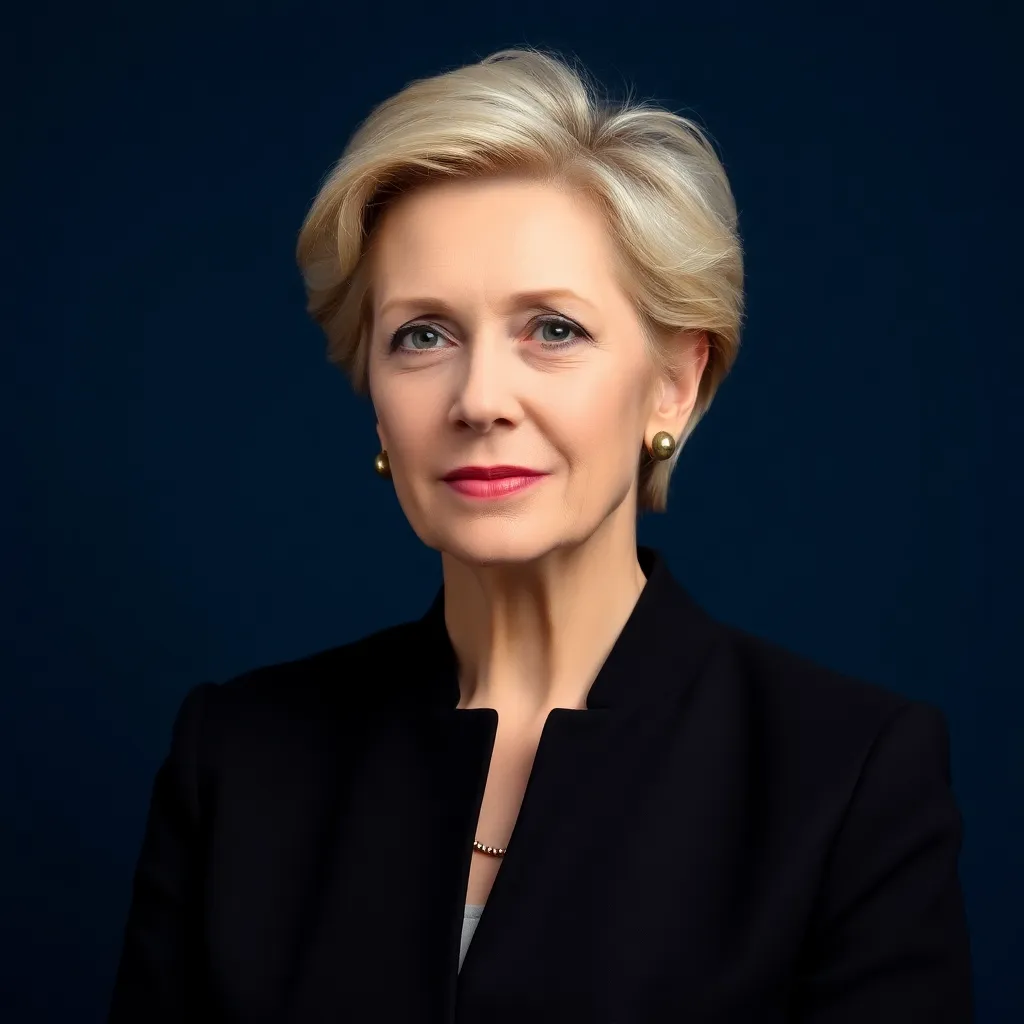
Ursula von der Leyen scores 93.5% (±3.4%) based on 201 verifiable claims from their last 1,000 tweets. 168 true, 30 somewhat misleading, 1 misleading, 2 false. 282 claims are pending verification.
168
30
1
2
The Indo-Pacific is crucial for the world’s security and any tension there affects global security.
The Indo-Pacific region is widely recognized as a critical area for global security due to its strategic location, economic significance, and the presence of major global powers. Tensions in this region, such as territorial disputes in the South China Sea, can have significant global security implications. This claim accurately reflects the importance of the Indo-Pacific in global security dynamics.
Trade is thriving between the EU and New Zealand, and there are 22 Horizon Europe partnerships in place.
The claim that trade is thriving between the EU and New Zealand is supported by data indicating a 31% increase in New Zealand's exports to the EU in December 2025 compared to the previous year. Additionally, the assertion of 22 Horizon Europe partnerships aligns with information from the European Union Delegation to New Zealand, which reports over 20 successful collaborations between New Zealand and European organizations under Horizon Europe.
The EU-Australia Free Trade Agreement has been concluded.
The claim that the EU-Australia Free Trade Agreement has been concluded is accurate. On March 24, 2026, European Commission President Ursula von der Leyen and Australian Prime Minister Anthony Albanese announced the conclusion of negotiations for this agreement. The pact aims to eliminate over 99% of tariffs on EU goods exported to Australia, potentially saving businesses approximately €1 billion in customs duties annually. Additionally, it includes provisions for improved access to the Australian services market and a secure supply of critical raw materials. The agreement also encompasses strong sustainability commitments and a new Security and Defence Partnership between the EU and Australia.
The EU and its Member States are the largest contributor to the UN.
The claim that the EU and its Member States are the largest contributor to the UN is accurate. Collectively, they finance one quarter of the UN regular budget and provide one third of all financial contributions to UN agencies, funds, and programmes. This information is based on definitive figures from 2022, as reported by the European External Action Service.
Energy prices are under pressure due to the ongoing war in the Middle East.
The claim that energy prices are under pressure due to the ongoing war in the Middle East is accurate. The conflict has led to significant disruptions in energy production and transportation, particularly through the Strait of Hormuz, a critical chokepoint for global oil shipments. As a result, Brent crude oil prices have surged above $100 per barrel, and European natural gas prices have increased by approximately 30%. These developments confirm that the Middle East conflict is exerting substantial upward pressure on global energy prices.
The European Commission is delivering €189 million to Moldova as part of the Moldova Growth Plan following the completion of 24 key reforms.
The European Commission has indeed delivered €189 million to Moldova under the Reform and Growth Facility, following the successful completion of 24 key reforms. This payment comprises €173 million directly into Moldova's state budget and €16 million allocated to projects through the Neighbourhood Investment Platform. The reforms achieved include reducing administrative burdens for businesses, strengthening cybersecurity, advancing digital government services, improving budget transparency, and enhancing the judicial system. These developments are well-documented in official European Commission communications.
The Druzhba pipeline was interrupted due to renewed Russian strikes on January 27, affecting crude oil supplies to Hungary and Slovakia.
The claim that the Druzhba pipeline was interrupted due to renewed Russian strikes on January 27, affecting crude oil supplies to Hungary and Slovakia, is accurate. Multiple sources confirm that on January 27, 2026, Russian forces attacked infrastructure connected to the Druzhba pipeline in Ukraine, leading to a halt in oil deliveries to Hungary and Slovakia. Ukrainian authorities reported that the pipeline was damaged by a Russian airstrike, resulting in the suspension of oil transit to these countries. Additionally, the European Union acknowledged the disruption and engaged in discussions to restore the flow of oil to Hungary and Slovakia.
The EU and India concluded a Free Trade Agreement and signed a Security and Defence Partnership at the EU-India Summit in January.
The claim that the EU and India concluded a Free Trade Agreement and signed a Security and Defence Partnership at the EU-India Summit in January 2026 is accurate. On January 27, 2026, during the 16th EU-India Summit in New Delhi, both parties announced the conclusion of negotiations for a Free Trade Agreement, marking a significant milestone in their economic relations. Additionally, they signed a Security and Defence Partnership, establishing a comprehensive framework for cooperation in areas such as maritime security, cyber issues, and counterterrorism. These developments are well-documented in official EU sources.
The situation in the Middle East is impacting energy prices in Europe.
The claim that the situation in the Middle East is impacting energy prices in Europe is accurate. Recent conflicts in the region have led to significant disruptions in energy supplies, notably affecting oil and natural gas markets. For instance, Brent crude prices surged above $116 per barrel following escalations involving Iran and Houthi attacks. Additionally, disruptions in liquefied natural gas (LNG) supplies from Qatar have removed approximately 1.5 million tonnes per week from global markets, contributing to increased volatility in European power prices. These developments underscore the direct impact of Middle Eastern conflicts on European energy prices.
The choice to diversify towards homegrown renewables and nuclear has paid off, but households and companies are facing pressure from price shocks.
The claim that diversifying towards homegrown renewables and nuclear has paid off is partially supported by evidence. The International Energy Agency (IEA) reports that renewables and nuclear are expected to account for around half of global electricity generation by 2030, indicating significant progress in these sectors. However, despite this diversification, households and companies are still experiencing pressure from price shocks. For instance, in the first half of 2025, wholesale electricity prices in the European Union and the United States rose by 30-40% compared to the same period a year earlier, largely due to higher natural gas prices amid a tighter global gas market. This suggests that while the shift towards renewables and nuclear has benefits, it has not fully insulated consumers from energy price volatility. Therefore, the claim is somewhat misleading as it implies a level of protection from price shocks that has not been fully realized.
Europe has half a million highly-skilled workers in nuclear technology.
The claim that Europe has half a million highly-skilled workers in nuclear technology is somewhat misleading. While the European nuclear industry supports approximately 800,000 jobs, only about 47% of these are highly skilled, equating to roughly 376,000 positions. Additionally, the sector faces significant challenges due to an aging workforce and a shortage of new professionals, indicating a potential skills gap. Therefore, the actual number of highly-skilled workers in nuclear technology is less than half a million, and the industry is experiencing workforce shortages.
There is a regional conflict with unintended consequences.
The claim that there is a regional conflict with unintended consequences is accurate. The 2026 Iran war has escalated into a broader regional conflict involving multiple countries, leading to significant unintended consequences such as economic disruptions, environmental damage, and humanitarian crises. For instance, the conflict has caused a surge in oil prices, disrupted global energy supplies, and resulted in substantial CO₂ emissions due to infrastructure destruction. Additionally, attacks on critical infrastructure have led to water shortages and food supply emergencies in the Gulf region. These developments underscore the widespread and unforeseen repercussions of the conflict.
Europe's energy system is cleaner, more diverse, and more stable than it was a few years ago.
The claim that Europe's energy system is cleaner, more diverse, and more stable than a few years ago is supported by multiple sources. In 2025, wind and solar energy accounted for 30% of the EU's electricity generation, surpassing fossil fuels at 29%, indicating a cleaner and more diverse energy mix. Additionally, the European Commission has implemented initiatives to boost investment in clean energy solutions, enhancing resilience and reducing energy prices. These efforts have led to a more stable energy system, as evidenced by the EU's reduced reliance on imported fossil fuels and increased energy independence.
An unmanned aerial vehicle targeted the British base in Akrotiri shortly after midnight.
Multiple reputable sources confirm that an unmanned aerial vehicle (UAV) targeted the British RAF Akrotiri base in Cyprus shortly after midnight on March 2, 2026. The attack, involving an Iranian-made Shahed-type drone, caused minor damage but no casualties. This aligns with the claim made in the tweet.
Iran has attacked Oman’s territory
Multiple credible sources confirm that Iran conducted drone and missile attacks on Omani territory starting on March 1, 2026. Targets included the ports of Duqm and Salalah, oil tankers near Muscat and Khasab, and an industrial zone in Sohar. These attacks resulted in casualties and infrastructure damage. While Iran has denied involvement, the consistency and detail of reports from various independent sources support the claim that Iran attacked Oman's territory.
The Iranian strikes in Manama were unjustified and unacceptable.
Iran conducted missile and drone strikes on Manama, Bahrain, targeting civilian infrastructure, including hotels and residential buildings, resulting in casualties and significant damage. These attacks have been widely condemned as unjustified and unacceptable by international observers and human rights organizations.
Iran conducted reckless and indiscriminate strikes on Qatar
Multiple credible sources confirm that Iran conducted missile and drone strikes on Qatar in late February and March 2026. These attacks targeted key infrastructure, including the Ras Laffan natural gas facility, leading to significant economic disruptions and injuries to civilians. The Qatari government condemned these actions as violations of its sovereignty. ([theatlantic.com](https://www.theatlantic.com/national-security/2026/03/trump-iran-war-qatar-gulf-energy-attack/686549/?utm_source=openai))
There were Iranian strikes on Jordan.
The claim that there were Iranian strikes on Jordan is accurate. On February 28, 2026, Iran launched a series of drone and missile attacks targeting American and allied military facilities across the Middle East, including Jordan. Jordanian and U.S. air defenses intercepted multiple projectiles that entered Jordanian airspace. Subsequent incidents in March 2026 involved further Iranian missile and drone attacks on Jordanian territory, resulting in injuries and damage. These events have been reported by multiple sources, confirming the occurrence of Iranian strikes on Jordan.
Almost 2/3 of global growth is happening outside of the US and China.
The claim that "almost 2/3 of global growth is happening outside of the US and China" is accurate. According to data from Visual Capitalist, China is projected to contribute 26.6% to global real GDP growth in 2026, while the United States accounts for 9.9%. Combined, they contribute 36.5%, leaving 63.5% of global growth attributed to other countries. This aligns with the claim that nearly two-thirds of global growth occurs outside the US and China.
Iran's strikes resulted in casualties and are condemned by Europe as unjustifiable attacks.
On February 28, 2026, Iran launched missile and drone strikes on the United Arab Emirates, resulting in casualties. As of March 29, 2026, the UAE reported intercepting numerous attacks, with confirmed casualties including military personnel and civilians. European leaders, including those from France, Germany, and the UK, condemned Iran's retaliatory strikes, emphasizing their commitment to regional stability and civilian protection. Therefore, the claim that Iran's strikes resulted in casualties and were condemned by Europe as unjustifiable attacks is accurate.
Romania is keeping the Black Sea region safe and is showing solidarity with Moldova and Ukraine.
Romania has actively contributed to the security of the Black Sea region and demonstrated solidarity with Moldova and Ukraine. Romania has provided significant support to Ukraine, including the transfer of a Patriot air defense system and facilitating the transit of necessary equipment through its territory. Additionally, Romania has been a key energy supplier to Ukraine and has invested in infrastructure projects to support Ukrainian exports. Romania has also supported Moldova by continuing energy exports and providing assistance to public order and security structures. These actions substantiate the claim that Romania is keeping the Black Sea region safe and showing solidarity with Moldova and Ukraine.
The G7 affirms its continued commitment to Ukraine and supports ongoing efforts for peace.
The G7 leaders issued a statement on February 24, 2026, reaffirming their unwavering support for Ukraine's territorial integrity, sovereignty, and independence. They also expressed support for ongoing peace efforts, including those initiated by President Trump, and emphasized Europe's leading role in the process. This aligns with the claim that 'The G7 affirms its continued commitment to Ukraine and supports ongoing efforts for peace.'
The European Commission has provided 3 billion euros in energy support and 11,000 generators to Ukraine since the start of the conflict.
The European Commission has provided over €3 billion in energy aid to Ukraine since the start of Russia's full-scale invasion, primarily through the Ukraine Energy Support Fund and the EU Civil Protection Mechanism. Additionally, the EU has delivered over 11,000 power generators to Ukraine to support its energy infrastructure. These figures are corroborated by official EU sources.
Europe is providing financial and military support to Ukraine during the winter.
The claim that Europe is providing financial and military support to Ukraine during the winter is accurate. As of February 2026, the European Union and its member states have mobilized approximately €194.9 billion in support for Ukraine, encompassing financial, economic, humanitarian, and military assistance. This includes €104.5 billion in financial, economic, and humanitarian support, and €69.7 billion in military assistance measures. Additionally, in December 2025, the European Council agreed to provide a €90 billion loan to Ukraine for the years 2026 and 2027 to address urgent financing needs, including budgetary and defense requirements. These actions demonstrate Europe's unwavering commitment to supporting Ukraine financially and militarily during the winter months.
Uruguay and Argentina became the first Mercosur countries to ratify the Agreement.
On February 26, 2026, both Uruguay and Argentina ratified the EU-Mercosur Agreement, becoming the first Mercosur countries to do so. Uruguay's lower house approved the agreement with a 91-2 vote, following unanimous support in the Senate. Argentina's Senate ratified the agreement with a 69-3 vote, after prior approval by the Chamber of Deputies. These actions made them the first Mercosur nations to ratify the agreement.
The European Council empowered the Commission to provisionally apply the Agreement as from the first ratification by a Mercosur country.
The European Council authorized the signing and provisional application of the EU-Mercosur Partnership Agreement and the Interim Trade Agreement on January 9, 2026. However, the claim that the Commission is empowered to apply the agreement "as from the first ratification by a Mercosur country" lacks clarity. The agreements require the consent of the European Parliament before they can be formally concluded, and ratification by all EU member states is necessary for the full Partnership Agreement to enter into force. While the Interim Trade Agreement can be provisionally applied without individual member state ratifications, the statement oversimplifies the process and omits the need for European Parliament consent, potentially leading to misunderstandings about the procedural requirements.
Sanctions work and are more effective when coordinated.
While coordinated sanctions can enhance their effectiveness, the overall impact of sanctions on Russia has been mixed. Some reports indicate that sanctions have significantly weakened Russia's economy and constrained its ability to sustain the war. However, other analyses suggest that Russia has adapted to sanctions, mitigating their intended effects. Therefore, while coordination may improve efficacy, the claim that 'sanctions work' lacks nuance and may lead a reasonable person to overestimate their effectiveness.
Five European nations have determined that Russia poisoned Alexei Navalny.
On February 14, 2026, the foreign ministries of the United Kingdom, France, Germany, Sweden, and the Netherlands jointly announced that analyses of samples from Alexei Navalny's body confirmed the presence of epibatidine, a lethal toxin found in poison dart frogs native to South America. These nations stated that Russia had the means, motive, and opportunity to administer this poison, thereby implicating the Kremlin in Navalny's poisoning. This information is corroborated by multiple reputable sources, including the Associated Press and The Guardian.
The United Arab Emirates is hosting peace talks and supporting the reconstruction of Ukraine.
The United Arab Emirates (UAE) has actively hosted peace talks between Ukraine and Russia, including trilateral discussions with the United States in Abu Dhabi in January and February 2026. Additionally, the UAE has demonstrated support for Ukraine's reconstruction efforts, as evidenced by its participation in the 2025 Ukraine Recovery Conference in Rome, where it reaffirmed its commitment to Ukraine's recovery and signed key arrangements to strengthen strategic partnerships.
The European Parliament adopted a proposal for an additional €90 billion loan for Ukraine.
The European Parliament approved a €90 billion loan package for Ukraine on February 11, 2026. The loan includes €60 billion for defense capabilities and €30 billion for macro-financial assistance, aligning with the claim made in the tweet.
Russia’s fiscal revenues from oil and gas dropped by 24% in 2025 compared to the previous year, the lowest level since 2020.
According to data from Russia's Finance Ministry, oil and gas revenues in 2025 totaled 8.477 trillion rubles ($108.05 billion), a 23.8% decrease from 2024's 11.131 trillion rubles ($141.80 billion). This marks the lowest level since 2020. The claim accurately reflects these figures.
Norway is an integral pillar of European security
Norway plays a significant role in European security through its active participation in NATO, its strategic Arctic location, and its cooperation with the European Union. As a founding member of NATO, Norway contributes to collective defense and regional stability. Its Arctic position is crucial for monitoring and securing northern European borders. Additionally, Norway's collaboration with the EU, including the 2024 Security and Defence Partnership, underscores its integral role in European security frameworks.
There is a political agreement on new sanctions against Iran and the designation of the Islamic Revolutionary Guard Corps as a terrorist organization.
On January 29, 2026, the European Union's Foreign Affairs Council reached a political agreement to impose new sanctions on Iran and to designate the Islamic Revolutionary Guard Corps (IRGC) as a terrorist organization. This decision was formalized on February 19, 2026, when the EU Council officially added the IRGC to its terrorist list, subjecting it to restrictive measures under the EU counter-terrorism sanctions regime. These measures include freezing the IRGC's funds and other financial assets within EU member states and prohibiting EU operators from making funds and economic resources available to the group. The claim accurately reflects these developments.
The world’s two largest democracies launched a Security and Defence Partnership.
The claim states that "the world’s two largest democracies launched a Security and Defence Partnership." However, on January 27, 2026, the European Union (EU) and India signed a Security and Defence Partnership. While India is the world's largest democracy, the EU is a political and economic union of 27 member states, not a single democratic nation. Therefore, the claim inaccurately describes the EU as the world's second-largest democracy, leading a reasonable person to misunderstand the nature of the entities involved.
Europe and India have concluded a free trade zone agreement involving two billion people.
The claim that Europe and India have concluded a free trade zone agreement involving two billion people is accurate. On January 27, 2026, the European Union and India finalized a historic Free Trade Agreement, creating the world's largest free trade zone encompassing approximately two billion people. This agreement aims to eliminate or reduce tariffs on over 90% of goods traded between the two regions, fostering economic growth and strengthening political ties. The combined market represents nearly 25% of the global GDP, underscoring the significance of this deal.
The EU has already imposed far-reaching sanctions on Iran for human rights abuses, nuclear proliferation, and its support.
The European Union has indeed imposed extensive sanctions on Iran for human rights abuses and nuclear proliferation. In July 2025, the EU sanctioned individuals and entities responsible for serious human rights violations, including transnational repression. ([consilium.europa.eu](https://www.consilium.europa.eu/en/press/press-releases/2025/07/15/iran-council-sanctions-eight-individuals-and-one-entity-over-serious-human-rights-violations-and-transnational-repression/pdf/?utm_source=openai)) Additionally, in September 2025, the EU reimposed restrictive measures related to Iran's nuclear proliferation activities, reinstating sanctions that had been suspended under the Joint Comprehensive Plan of Action (JCPOA). ([consilium.europa.eu](https://www.consilium.europa.eu/en/press/press-releases/2025/09/29/iran-sanctions-snapback-council-reimposes-restrictive-measures/pdf/?utm_source=openai)) These actions confirm the EU's commitment to addressing both human rights concerns and nuclear proliferation in Iran.
The EU and US agreed to a trade deal last July.
The claim that the EU and US agreed to a trade deal in July 2025 is accurate. On July 27, 2025, European Commission President Ursula von der Leyen and US President Donald J. Trump announced a political agreement on tariffs and trade, establishing a 15% tariff ceiling on most EU exports to the US. This agreement aimed to restore stability and predictability in transatlantic trade relations. The deal was further detailed in a Joint Statement published on August 21, 2025, confirming and building upon the July agreement.
We are committed to uphold the sovereignty of Greenland and the Kingdom of Denmark.
The claim that the politician and their counterparts are committed to upholding the sovereignty of Greenland and the Kingdom of Denmark is accurate. In January 2026, European leaders, including those from the UK, Germany, and France, expressed unequivocal support for Denmark and Greenland's sovereignty in response to U.S. President Donald Trump's renewed interest in acquiring Greenland. The European Parliament also adopted a statement emphasizing the importance of respecting the territorial integrity of Denmark and Greenland. These actions demonstrate a collective commitment to upholding the sovereignty of Greenland and the Kingdom of Denmark.
The EU-Mercosur Association Agreement was signed in Asunción.
The EU-Mercosur Association Agreement was signed on January 17, 2026, in Asunción, Paraguay. This event marked the culmination of over 25 years of negotiations between the European Union and the Mercosur bloc, comprising Argentina, Brazil, Paraguay, and Uruguay. The signing ceremony took place at the Gran Teatro José Asunción Flores, the same venue where the founding treaty of Mercosur was signed in 1991.
The EU-Mercosur deal creates the largest free trade area in the world.
The EU-Mercosur agreement, signed on January 17, 2026, creates a free trade area encompassing over 700 million people, making it the largest of its kind globally. This deal eliminates tariffs on a significant portion of goods traded between the European Union and Mercosur countries (Argentina, Brazil, Paraguay, and Uruguay), thereby establishing the world's largest free trade zone.
The European Union has listed the Islamic Revolutionary Guard Corps in its entirety under its human rights sanctions regime.
As of January 13, 2026, the European Union had imposed sanctions on individuals and entities associated with the Islamic Revolutionary Guard Corps (IRGC) for human rights violations, but had not listed the IRGC in its entirety under its human rights sanctions regime. The EU's designation of the IRGC as a terrorist organization occurred later, on February 19, 2026. Therefore, the claim made on January 13, 2026, was premature and lacked full context.
Moldova has joined the Single Euro Payments Area and the EU’s roaming scheme.
Moldova joined the Single Euro Payments Area (SEPA) on October 6, 2025, enabling faster and more affordable euro transactions. Additionally, as of January 1, 2026, Moldova became part of the EU's 'Roam Like at Home' scheme, allowing Moldovan and EU citizens to use mobile services without additional roaming charges. These developments confirm the claim's accuracy.
Yesterday’s agreement on security guarantees is a key step towards a just and lasting peace for Ukraine.
On January 6, 2026, a coalition of about 30 Western and European countries agreed in Paris to provide robust and binding security guarantees for Ukraine as part of any future peace settlement. This agreement represents a significant step toward achieving a just and lasting peace for Ukraine. Additionally, European Commission President Ursula von der Leyen has emphasized that Ukraine's accession to the EU serves as a key security guarantee in its own right.
EU Member States, NATO allies, and friends of Ukraine showed unity for Ukraine at a leaders meeting in Paris.
The claim accurately describes the events of January 6, 2026, when leaders from EU Member States, NATO allies, and other supporters of Ukraine convened in Paris for the 'Coalition of the Willing' meeting. The summit focused on discussing security guarantees for Ukraine, and a joint statement was issued, underscoring the collective commitment to Ukraine's sovereignty and security. This information is corroborated by multiple reputable sources, including Euronews and the Council of the EU.
The Coalition of the Willing is meeting in Paris to provide security guarantees for Ukraine.
The claim that the 'Coalition of the Willing' met in Paris on January 6, 2026, to provide security guarantees for Ukraine is accurate. Reports confirm that leaders from approximately 35 countries convened in Paris to discuss and commit to robust security guarantees for Ukraine, aiming to deter future aggression and support Ukraine's defense capabilities. The meeting resulted in a joint declaration outlining these commitments.
2025 was a significant year for EU trade with new partnerships that strengthened the economy.
In 2025, the European Union (EU) engaged in several significant trade agreements aimed at strengthening its economy. Notably, the EU finalized a free trade agreement with Australia, addressing longstanding issues over market access and product labeling, and also established a defense partnership. Additionally, the EU and the United States reached a trade deal imposing a 15% tariff on EU imports, with exemptions for certain sectors, aiming to stabilize transatlantic trade relations. However, the EU-Mercosur agreement faced delays due to internal opposition and concerns over environmental standards, leading to postponements in its finalization. While these developments indicate active efforts to forge new partnerships, the claim that 2025 was a significant year for EU trade is somewhat misleading, as some agreements faced challenges and did not fully materialize as intended.
The European Union has provided €193 billion in financial, military, and humanitarian support to Ukraine.
The claim that the European Union has provided €193 billion in financial, military, and humanitarian support to Ukraine is accurate. As of early 2026, the EU and its member states have collectively provided approximately €194.9 billion in support to Ukraine, encompassing financial, economic, humanitarian, and military assistance. This figure includes over €104.5 billion in financial, economic, and humanitarian support, and €69.7 billion in military assistance. The claim slightly underestimates the total support provided, but it is substantially correct.
Support to Ukraine, energy independence from Russia, defense, and migration were delivered on over the last six months.
The claim that support to Ukraine, energy independence from Russia, defense, and migration were delivered on over the last six months is accurate. The EU has provided substantial financial aid to Ukraine, including a €90 billion loan agreed upon in December 2025 to support Ukraine's military and economic needs for 2026-2027. Efforts toward energy independence from Russia have been significant, with the EU committing to end dependency on Russian natural gas by 2027 and ceasing LNG imports from Russia in the upcoming year. In terms of defense, the EU has provided around €66 billion in military support since the start of Russia's full-scale aggression, including €6.4 billion through the European Peace Facility. On migration, the EU has made progress on the Pact on Migration and Asylum, notably with agreements on Return and Safe countries of origin legislation. These actions collectively demonstrate that the EU has delivered on these fronts over the specified period.
The signature of the Mercosur deal has been postponed.
The claim that the signature of the Mercosur deal has been postponed is accurate. The signing, initially scheduled for December 2025, was delayed to January 2026 due to opposition from EU member states like France and Italy, as well as protests from European farmers concerned about the deal's impact on agriculture. European Commission President Ursula von der Leyen confirmed the postponement, stating the need for additional time to address member states' concerns.
Today's Claims Commission agreement holds the aggressor accountable for Russia's brutality.
The claim states that the Claims Commission agreement holds Russia accountable for its actions in Ukraine. While the establishment of the International Claims Commission for Ukraine on December 16, 2025, is a significant step toward seeking reparations from Russia, the commission's effectiveness depends on Russia's cooperation, which is unlikely. The commission will assess claims and determine compensation amounts, but actual payments rely on voluntary contributions, as Russia is not expected to comply willingly. Therefore, while the agreement aims to hold Russia accountable, its practical impact is uncertain.
There is real progress in the alignment between Ukraine, Europe, and the US.
The claim that there is 'real progress thanks to the alignment between Ukraine, Europe, and the US' is partially accurate. While there have been significant diplomatic efforts and some progress in discussions, major disagreements remain unresolved, particularly concerning territorial concessions in the Donbas region. Therefore, the statement is somewhat misleading as it overstates the extent of alignment and progress achieved.
Political prisoners have been released in Belarus, including Ales Bialiatski and Maria Kalesnikava.
On December 13, 2025, Belarusian authorities released 123 political prisoners, including Nobel Peace Prize laureate Ales Bialiatski and opposition figure Maria Kalesnikava. This release was part of an agreement with the United States to ease sanctions on Belarus's potash exports. The claim accurately reflects these events.
The Council decided to continue the immobilisation of Russian Sovereign Assets as a response to Russia's war of aggression.
The European Council decided to indefinitely freeze approximately €210 billion in Russian sovereign assets held in Europe as a response to Russia's ongoing war of aggression against Ukraine. This decision was made to prevent Russia from accessing these funds and to potentially use them to support Ukraine's reconstruction efforts. The immobilization will remain in effect until Russia ends its aggression and compensates for the damages caused.
Ukraine’s security is Europe’s security.
The claim that 'Ukraine’s security is Europe’s security' reflects a widely held view among European leaders and security experts. Ukraine's geopolitical position and its conflict with Russia have significant implications for European stability and security. This perspective is supported by numerous policy statements and security analyses.
The EU has overhauled its migration policy in the last two years.
The claim that "the EU has overhauled its migration policy in the last two years" is accurate. In December 2023, the European Union reached a significant agreement on the Pact on Migration and Asylum, aiming to reform the bloc's migration and asylum policies. This pact was officially approved by the EU's economy ministers in May 2024, marking a comprehensive overhaul of the EU's migration system. The reforms include measures such as faster processing at borders, enhanced cooperation with origin and transit countries, and a flexible solidarity mechanism among member states. These developments substantiate the claim of a substantial policy overhaul within the specified timeframe.
The transfer of local governance in the north of Kosovo after the recent local elections was peaceful and the European Commission is programming €216 million of financial assistance for Kosovo.
The claim that the transfer of local governance in northern Kosovo after the recent local elections was peaceful is accurate, as reports confirm a smooth and orderly process. However, the statement that the European Commission is programming €216 million of financial assistance for Kosovo lacks context. While €216 million was released following the peaceful transfer, this amount represents only 50% of the total financial assistance, with the remaining funds contingent upon further developments. Therefore, the claim omits important details about the conditional nature of the full financial assistance.
Russia's war-time economy is a direct threat to national and economic security in the EU.
The claim that Russia's wartime economy poses a direct threat to the EU's national and economic security is partially accurate. Russia has significantly increased its defense spending, with estimates indicating a rise from $86.4 billion in 2022 to $191 billion in 2025. This militarization has led to aggressive actions, including cyberattacks on EU member states like Poland, where a major assault targeted the energy sector in December 2025. However, Russia's economy is facing substantial challenges, including potential banking crises and economic stagnation, which may limit its capacity to sustain prolonged aggression. While Russia's actions and military focus are concerning, the extent of the direct threat to the EU's security is nuanced and depends on various factors, including Russia's internal economic stability and the EU's defensive measures.
The Pact on Migration and Asylum is being implemented and adopted in record time, overhauling migration policy.
The claim states that the Pact on Migration and Asylum is being implemented and adopted in record time, overhauling migration policy. While the Pact was adopted in May 2024 and is set to enter into application on 12 June 2026, the implementation process has faced challenges. For instance, as of March 2026, France is at risk of failing to transpose the legislative package into national law in time, raising concerns about legal confusion. This indicates that while progress has been made, the implementation is not proceeding uniformly or without issues across all member states.
The Coalition of the Willing is focused on supporting Ukraine and increasing European defense preparedness.
The Coalition of the Willing has consistently focused on supporting Ukraine and enhancing European defense preparedness. Meetings held throughout 2025, including those in July and October, emphasized military aid to Ukraine, strengthening air defense capabilities, and planning for a multinational force to secure Ukraine post-conflict. These actions align with the claim that the coalition is dedicated to supporting Ukraine and increasing European defense readiness.
The EU adopted its first-ever law to fight violence against women and domestic violence last year.
The claim states that the EU adopted its first-ever law to combat violence against women and domestic violence last year. This is accurate. In May 2024, the European Union adopted Directive (EU) 2024/1385, its first binding legal instrument specifically addressing violence against women and domestic violence. The directive requires all EU member states to criminalize offenses such as female genital mutilation, forced marriage, and certain forms of cyber violence, including the non-consensual sharing of intimate images. It also establishes measures for victim protection and support. Therefore, the claim is true.
The EU helped secure a global agreement at COP30 to keep the 1.5c limit and transition away from fossil fuels.
The claim states that the EU helped secure a global agreement at COP30 to keep the 1.5°C limit within reach and transition away from fossil fuels. While COP30 did result in an agreement that reaffirmed the commitment to the 1.5°C target, the final text notably omitted explicit mention of phasing out fossil fuels due to opposition from major oil-producing countries. Therefore, while the EU's efforts contributed to maintaining the 1.5°C goal, the agreement fell short of committing to a transition away from fossil fuels.
Clean energy transitions are cost-competitive and can drive growth in the 21st century.
The claim that clean energy transitions are cost-competitive and can drive growth in the 21st century is supported by multiple sources. The International Energy Agency (IEA) reported that global energy investment reached a record $3.3 trillion in 2025, with $2.2 trillion directed toward clean energy technologies, indicating their cost competitiveness and attractiveness to investors. Additionally, the World Economic Forum highlighted that clean energy investments are surging as costs plummet, with solar and energy storage leading the charge. These developments demonstrate that clean energy transitions are both economically viable and capable of driving growth in the 21st century.
The EU and CPTPP represent over 1 billion people.
The claim that the EU and CPTPP together represent over 1 billion people is an overestimation. As of January 1, 2025, the EU's population was approximately 450.4 million. The CPTPP includes countries such as Japan, Canada, Australia, and others, with a combined population of around 500 million. Therefore, their total combined population is approximately 950 million, which is below the 1 billion mark. While the figure is close, stating 'over 1 billion' is an exaggeration.
Türkiye is essential in managing migration along the Eastern Mediterranean route.
Türkiye plays a crucial role in managing migration along the Eastern Mediterranean route. The EU-Türkiye Statement of March 2016 has been instrumental in reducing irregular migration flows to Europe, with Türkiye hosting one of the largest refugee populations globally, including over 2.3 million Syrian refugees. Additionally, the EU has provided substantial financial support to Türkiye, amounting to €6 billion between 2016 and 2019, to assist in managing migration and supporting refugees. These efforts underscore Türkiye's essential position in controlling migration along this route.
The European Commission has invested 120 billion euros in Africa as part of the Global Gateway initiative.
The European Commission's Global Gateway initiative initially aimed to mobilize €150 billion in investments for Africa between 2021 and 2027. By October 2025, the Commission announced that this target had been met and set a new objective of mobilizing €400 billion in investments worldwide by 2027. Therefore, the claim that €120 billion has been invested in Africa as part of the Global Gateway initiative is consistent with the reported progress and is accurate.
€15.5 billion has been committed to scaling up renewable energy across Africa, including €15.1 billion from Team Europe.
The claim that €15.5 billion has been committed to scaling up renewable energy across Africa, including €15.1 billion from Team Europe, is accurate. A year-long campaign led by European Commission President Ursula von der Leyen and South African President Cyril Ramaphosa secured these commitments to support Africa's clean energy transition. The European Union led the pledging effort, contributing over €15.1 billion, which includes a €10 billion pledge from Team Europe and additional bilateral contributions from European financial institutions and Member States.
The EU is the largest provider of external assistance to the Palestinian people.
The European Union has consistently been the largest provider of external assistance to the Palestinian people. Between 2014 and 2020, the EU allocated €2.2 billion in bilateral assistance. For the period 2021-2024, the EU planned an indicative €1.18 billion in aid. Additionally, in April 2025, the EU announced a multiannual programme worth up to €1.6 billion for Palestinian recovery and resilience for 2025-2027. These substantial contributions affirm the EU's position as the leading donor to the Palestinian people.
We are signing the first-ever Clean Trade and Investment Partnership.
The claim that 'We are signing the first-ever Clean Trade and Investment Partnership' is accurate. On November 20, 2025, the European Union and South Africa signed the inaugural Clean Trade and Investment Partnership (CTIP), marking the first agreement of its kind aimed at promoting bilateral trade and investments in clean supply chains. This partnership focuses on sectors such as renewable energy, electricity transmission, clean fuels, raw materials value chains, and climate mitigation technologies. The CTIP builds upon the existing EU-South Africa Strategic Partnership and the Economic Partnership Agreement, supporting both parties' decarbonization objectives and economic growth. [Source: European Commission Directorate-General for Trade and Economic Security, November 20, 2025]
Today's Military Mobility Package will strengthen Europe's readiness and ability to move quickly in crisis.
The Military Mobility Package, presented by the European Commission and the High Representative on November 19, 2025, aims to enhance Europe's readiness and ability to move quickly in crisis situations. It introduces measures to remove regulatory barriers, harmonize rules, and strengthen infrastructure, thereby facilitating the swift, coordinated, and secure movement of military personnel and equipment across the EU. These initiatives are designed to strengthen Europe's defense posture by addressing existing mobility barriers that currently impede rapid military transport across borders.
Poland is the largest defence spender in Europe and will be the biggest beneficiary of the SAFE instrument.
Poland is the largest defense spender in Europe relative to GDP, allocating 4.5% in 2025, surpassing other European nations. Additionally, Poland is the largest beneficiary of the EU's SAFE instrument, receiving €43.7 billion out of the €150 billion total, more than any other member state.
EU Finance Ministers have agreed to remove the customs exemption for low-value parcels coming into the EU.
On November 13, 2025, EU finance ministers agreed to eliminate the €150 customs duty exemption for low-value parcels entering the EU. This decision means that all parcels, regardless of value, will be subject to standard customs procedures. The change is part of a broader effort to modernize the EU's customs framework and address issues such as unfair competition and environmental concerns associated with the surge in small parcel imports. The new rules are set to take effect once the EU customs data hub becomes operational, expected in 2028, with an interim flat rate customs duty of €3 per item category in small parcels valued under €150 starting from July 1, 2026.
The European Parliament voted on a proposal to reduce carbon emissions by 90% by 2040.
On November 13, 2025, the European Parliament adopted its position on amending the European Climate Law to include a binding target of reducing net greenhouse gas emissions by 90% by 2040 compared to 1990 levels. This vote aligns with the European Council's position agreed upon on November 5, 2025, and is a significant step towards the EU's goal of achieving climate neutrality by 2050.
Switzerland is joining Horizon Europe
On November 10, 2025, Switzerland and the European Union signed an agreement for Switzerland's participation in Horizon Europe, effective retroactively from January 1, 2025. This agreement grants Swiss researchers the same rights and opportunities as their EU counterparts, including leading consortia and receiving direct EU funding. The claim accurately reflects this development.
The EU is strengthening weather forecasting with Copernicus satellites as part of its support for the Caribbean in facing climate change.
The European Union's Copernicus Programme operates a fleet of Earth observation satellites, including the Sentinel series, which provide critical data for weather forecasting and climate monitoring. These satellites deliver freely accessible data that can be utilized globally, including by Caribbean nations, to enhance their weather forecasting capabilities and address climate change challenges. Therefore, the claim that the EU is strengthening weather forecasting with Copernicus satellites as part of its support for the Caribbean in facing climate change is accurate.
The EU has adopted its Nationally Determined Contribution (NDC) for 2035, aiming for a 66-72% reduction in greenhouse gas emissions from 1990 levels by 2035.
The claim accurately states that the European Union has adopted its Nationally Determined Contribution (NDC) for 2035, aiming for a 66.25% to 72.5% reduction in greenhouse gas emissions from 1990 levels by 2035. This information is confirmed by the Council of the European Union's press release dated November 5, 2025, which outlines the EU's updated NDC submission to the UNFCCC ahead of COP30. The NDC reiterates the EU's goal of achieving a net reduction of 55% in greenhouse gas emissions by 2030 and introduces an indicative contribution of 66.25% to 72.5% for 2035 on the path towards carbon neutrality by 2050.
95% of new energy capacity worldwide comes from renewables.
In 2024, global renewable energy capacity increased by 585 gigawatts, accounting for 92.5% of total power expansion. Solar and wind energy together contributed 96.6% of this renewable capacity growth. While the claim states that 95% of new energy capacity worldwide comes from renewables, the actual figure is slightly lower at 92.5%. However, the difference is minimal, and the claim accurately reflects the significant dominance of renewables in new energy capacity additions.
Over 80 countries now have a carbon price.
The claim that "over 80 countries now have a carbon price" is somewhat misleading. As of early 2025, 52 countries have implemented carbon pricing instruments, including carbon taxes and emissions trading systems. While there are 80 carbon pricing mechanisms in operation worldwide, these are distributed across 52 countries, not over 80 countries. Therefore, the statement overstates the number of countries with carbon pricing by conflating the number of mechanisms with the number of countries implementing them.
EU Member States have approved the 19th package of sanctions against Russia, targeting its gas sector.
The claim that EU Member States approved the 19th package of sanctions against Russia, targeting its gas sector, is accurate. On October 23, 2025, the EU adopted a comprehensive set of sanctions, including a total ban on Russian liquefied natural gas (LNG) imports, with short-term contracts ending within six months and long-term contracts by January 1, 2027. This marks the first time the EU has imposed such measures specifically targeting Russia's gas sector. ([commission.europa.eu](https://commission.europa.eu/news-and-media/news/eu-adopts-new-sanctions-against-russia-2025-10-23_en?utm_source=openai))
President Alsisi played a crucial role in the agreement to end the Gaza conflict.
President Abdel Fattah el-Sisi of Egypt played a pivotal role in mediating the agreement to end the Gaza conflict. He co-chaired the Sharm El-Sheikh Peace Summit on October 13, 2025, alongside U.S. President Donald Trump, where the ceasefire agreement was signed. Egypt's mediation efforts were instrumental in facilitating the ceasefire between Israel and Hamas, leading to the cessation of hostilities and the release of hostages. These actions underscore President el-Sisi's crucial involvement in resolving the conflict.
The EU-Egypt Strategic & Comprehensive Partnership includes Horizon Europe association and €5 billion in macro-financial assistance for Egypt's reform agenda.
The EU-Egypt Strategic and Comprehensive Partnership, signed in March 2024, includes Egypt's association with Horizon Europe and €5 billion in macro-financial assistance. Negotiations for Egypt's association with Horizon Europe concluded successfully in April 2025, with the agreement expected to be signed by November 2025. The €5 billion macro-financial assistance comprises a €1 billion short-term loan disbursed in December 2024 and a €4 billion package adopted in 2025, with the first €1 billion of this package disbursed in January 2026.
Clean tech markets around the world are booming.
The claim that 'Clean tech markets around the world are booming' is supported by multiple sources. S&P Global Commodity Insights forecasts that cleantech energy supply investments will reach $670 billion in 2025, surpassing upstream oil and gas spending for the first time. Additionally, global investment in clean energy increased by 10% year-on-year to a record $386 billion in the first half of 2025. China's clean tech exports have also surged, with monthly green tech exports hitting a record $20 billion in August 2025. These data points collectively indicate a significant global expansion in clean tech markets.
The Pact for the Mediterranean aims to simplify business, unlock investment, and bring people together.
The Pact for the Mediterranean, launched on 28 November 2025, aims to strengthen cooperation between the EU and Southern Mediterranean partners. Its objectives include fostering economic ties, promoting investment, and enhancing regional integration, aligning with the claim of simplifying business, unlocking investment, and bringing people together.
The European Defence Industry Programme has an agreement for €1.5 billion to strengthen Europe’s defence industry.
The claim accurately states that the European Defence Industry Programme (EDIP) has an agreement for €1.5 billion to strengthen Europe's defence industry. On October 16, 2025, the Council of the EU and the European Parliament reached a provisional agreement on EDIP, allocating €1.5 billion for the period 2025–2027 to enhance the EU's defence readiness and support Ukraine. This information is corroborated by official EU press releases and news articles.
We are disbursing 16 million euros thanks to the reforms you have made.
European Commission President Ursula von der Leyen announced the disbursement of €16 million to North Macedonia, attributing it to the country's reform efforts. This statement is corroborated by reports indicating that, as of October 2025, the European Commission assessed North Macedonia's progress and approved the disbursement of approximately €17.1 million under the Reform Agenda. This aligns with von der Leyen's claim, confirming its accuracy.
Accession negotiations for Bosnia and Herzegovina opened 1.5 years ago.
The claim states that accession negotiations for Bosnia and Herzegovina opened 1.5 years ago from October 14, 2025, which would be around April 2024. However, the European Council decided to open accession negotiations with Bosnia and Herzegovina on March 21, 2024, which is approximately 1.5 years before October 2025. Therefore, the claim is accurate.
Montenegro has joined Europe’s Single Payment Area, making money transfers between Montenegro, North Macedonia, Albania, and the EU safer and cheaper.
Montenegro officially joined the Single Euro Payments Area (SEPA) on October 7, 2025, enabling faster, safer, and cheaper euro transactions between Montenegro, North Macedonia, Albania, and EU countries. This integration allows citizens and businesses to send and receive euros across more than 40 SEPA countries under the same terms as within the European Union. The claim accurately reflects these developments.
Montenegro is a great place to do business and there are 14 EU projects being launched there.
The claim that 'Montenegro is a great place to do business and there are 14 EU projects being launched there' is accurate. On October 14, 2025, the EU–Montenegro Investment Conference titled 'Smart Growth, Green Future – Accelerating Investments in Montenegro' was held in Luštica. This event showcased Montenegro's potential for strategic, green, and sustainable investments through new partnerships between leading Montenegrin and European companies. The conference aimed to position Montenegro as a key investment destination in the Western Balkans, focusing on sectors such as renewable energy, sustainable agribusiness, tourism, transport, and digital innovation. This aligns with the claim of launching 14 EU projects in Montenegro.
Montenegro is a frontrunner in the EU accession process and can reach its EU ambitions if it stays committed.
As of October 2025, Montenegro had opened all 33 negotiating chapters in its EU accession process and had provisionally closed seven chapters, indicating significant progress. European Council President Antonio Costa praised Montenegro as a frontrunner in the EU enlargement process, highlighting its commitment and progress toward EU membership. Therefore, the claim that Montenegro is a frontrunner in the EU accession process and can achieve its EU ambitions if it remains committed is accurate.
The Growth Plan provides access to the Single Market and brings new EU investments, with Albania receiving almost €100 million today.
The claim accurately states that the EU's Growth Plan provides access to the Single Market and brings new EU investments. Specifically, Albania received approximately €100 million in October 2025 after fulfilling 21 out of 41 reform measures between December 2024 and June 2025. This disbursement was announced by European Commission President Ursula von der Leyen during her visit to Tirana, confirming Albania's progress in implementing structural reforms in key areas such as energy, digitalisation, competitiveness, sustainable development, and economic integration.
Albania is on the right track towards EU membership with record-speed acceleration in the past three years.
Albania has indeed made significant progress toward EU membership over the past three years. Since the initiation of accession talks in July 2022, Albania has rapidly advanced by opening all six negotiation clusters, including the final one on resources, agriculture, and cohesion in November 2025. This swift progression reflects Albania's strong commitment to EU integration and the EU's recognition of its efforts. Therefore, the claim that Albania is on the right track towards EU membership with record-speed acceleration in the past three years is accurate.
Europe fully supports the peace plan brokered by the United States, Qatar, and Egypt.
European Commission President Ursula von der Leyen publicly stated that Europe fully supports the peace plan brokered by the United States, Qatar, Egypt, and Türkiye. She emphasized the EU's readiness to contribute to the plan's success, particularly in supporting governance reforms and the reconstruction of Gaza. This statement aligns with the claim that Europe fully supports the peace plan.
Mauritania is a trusted partner of the EU and progress has been made in the Global Gateway initiative in migration and energy since last year.
The claim that Mauritania is a trusted partner of the EU and that progress has been made in the Global Gateway initiative in migration and energy since last year is accurate. In October 2025, during the Global Gateway Forum, EU President Ursula von der Leyen and Mauritanian President Mohamed Ould Ghazouani reaffirmed their strong partnership, announcing a €269 million investment package covering energy, transport, and budget support. This package reflects the EU's commitment to sustainable development, advancing the green transition, strengthening the health sector, and supporting migration management in Mauritania. Additionally, in July 2025, the European Investment Bank and Banque El Amana signed a €20 million loan agreement to support seafood value chains, with a focus on financial inclusion for women and young people in the blue economy. These developments demonstrate significant progress in the Global Gateway initiative in the areas of migration and energy.
The European Commission is investing almost €12 billion in Global Gateway investments and has a €618 million Team Europe package to support renewable energy in Africa.
The claim accurately reflects the European Commission's commitments. In October 2025, during the Global Gateway Forum, President Ursula von der Leyen announced a Team Europe investment package worth nearly €12 billion to support South Africa's just energy transition and sustainable infrastructure. Additionally, a €618 million package was unveiled to scale up renewable energy projects across Africa. These initiatives are part of the EU's Global Gateway strategy to promote sustainable and high-quality investments worldwide.
There is an agreement to secure a ceasefire and the release of hostages in Gaza.
On October 9, 2025, Israel and Hamas agreed to a ceasefire and the release of hostages in Gaza, as part of a U.S.-brokered peace plan. The Israeli Cabinet approved the agreement, which included an immediate ceasefire, partial Israeli withdrawal from Gaza, and the release of hostages held by Hamas. This information is corroborated by multiple reputable sources, including The Washington Post and The Guardian.
The EU is committing nearly €1.6 billion for recovery and reconstruction after the floods in Valencia.
The European Commission proposed nearly €1.6 billion in EU funds to assist Spain's recovery from the October 2024 floods in Valencia. This package includes €945 million from the EU Solidarity Fund and €645 million reallocated from Spain's cohesion policy funds via the RESTORE mechanism. The claim accurately reflects these commitments.
Leaders of the European Political Community Summit set out steps to address illegal migration.
At the European Political Community Summit on October 2, 2025, leaders from multiple European countries collectively outlined steps to address the challenges of illegal migration. They emphasized a 'whole-of-route approach' and committed to supporting each other in efforts such as taking strong action against smugglers and securing borders. This aligns with the claim that leaders set out steps to address illegal migration.
Armenia made landmark progress with Azerbaijan in Washington, facilitated by President Trump.
On August 8, 2025, Armenian Prime Minister Nikol Pashinyan and Azerbaijani President Ilham Aliyev, facilitated by U.S. President Donald Trump, signed a joint declaration at the White House. This agreement marked significant progress toward peace between Armenia and Azerbaijan, aiming to end decades of conflict over the Nagorno-Karabakh region. The event was widely reported, confirming the claim's accuracy.
The people of Moldova chose Europe in a recent vote.
In the parliamentary elections held on September 28, 2025, Moldova's pro-European Party of Action and Solidarity (PAS), led by President Maia Sandu, secured a decisive majority with over 50% of the vote. This outcome reflects a clear mandate from the Moldovan electorate in favor of European integration. The election was widely viewed as a pivotal choice between aligning with the European Union or moving closer to Russia, and the results indicate a strong preference for the former.
The EU–Norway partnership is strong and thriving due to close cooperation.
The claim that the EU–Norway partnership is strong and thriving due to close cooperation is supported by multiple developments. In April 2023, the EU and Norway signed the Green Alliance to enhance cooperation on climate action and energy transition. In May 2024, they established a Security and Defence Partnership, reflecting their close collaboration in these areas. Additionally, Norway has significantly increased its role as the EU's largest supplier of natural gas, accounting for 31% of total EU imports in 2025, up from 24% in 2021. These examples demonstrate a robust and flourishing partnership between the EU and Norway.
Azerbaijan achieved a historic breakthrough with Armenia in Washington with the support of President Trump.
On August 8, 2025, Azerbaijani President Ilham Aliyev and Armenian Prime Minister Nikol Pashinyan signed a U.S.-brokered peace agreement at the White House, with President Donald Trump mediating the discussions. This agreement aimed to end decades of conflict between the two nations. Therefore, the claim that "Azerbaijan achieved a historic breakthrough with Armenia in Washington with the support of President Trump" is accurate.
The European Commission is disbursing €4 billion for military support to Ukraine, with half dedicated to drones.
On October 1, 2025, European Commission President Ursula von der Leyen announced the disbursement of €4 billion to Ukraine, specifying that €2 billion of this amount would be allocated for drones. This statement was reported by multiple reputable sources, confirming the accuracy of the claim.
The European Commission is providing a new Team Europe package of €545 million for renewables in Africa.
The European Commission announced a €545 million Team Europe package to accelerate Africa's clean energy transition. This announcement was made by President Ursula von der Leyen at the Global Citizen Festival, in the context of the United Nations General Assembly. The package includes projects supporting electrification, modernizing power grids, and improving access to renewable energy across various African countries.
The clean transition is moving forward since the adoption of the Paris Agreement.
The claim that "The clean transition is moving forward since the adoption of the Paris Agreement" is partially accurate. Since the Paris Agreement in 2015, there has been notable progress in the deployment of renewable energy technologies. For instance, in 2024, renewable energy sources accounted for over 40% of global electricity generation, with solar and wind energy experiencing significant growth. However, despite these advancements, fossil fuels still dominate the global energy mix, comprising approximately 80% in 2024, only a slight decrease from 83% in 2015. Additionally, global greenhouse gas emissions have continued to rise, and in 2024, the global temperature exceeded the 1.5°C threshold for the first time in a single year. Therefore, while there has been movement towards cleaner energy, the overall transition is not as comprehensive or rapid as the claim might suggest.
The deal with Indonesia creates new opportunities for businesses and farmers and provides Europe with a stable supply of critical raw materials.
The EU-Indonesia Comprehensive Economic Partnership Agreement (CEPA), finalized on September 23, 2025, is designed to create new opportunities for businesses and farmers by eliminating tariffs on over 98% of tariff lines, thereby facilitating access to a market of 283 million consumers. Additionally, the agreement secures a stable supply of critical raw materials, such as nickel and cobalt, essential for Europe's clean tech and steel industries. These provisions align with the claim that the deal creates new opportunities and provides Europe with a stable supply of critical raw materials.
The Marine Biodiversity Treaty has entered into force.
The claim that the Marine Biodiversity Treaty has entered into force is accurate; the Biodiversity Beyond National Jurisdiction (BBNJ) Agreement, also known as the High Seas Treaty, officially entered into force on January 17, 2026. However, the tweet was posted on September 20, 2025, at which time the treaty had not yet entered into force. On that date, the treaty had achieved the necessary 60 ratifications, triggering a 120-day countdown to its entry into force on January 17, 2026. Therefore, while the treaty was set to enter into force, it had not yet done so at the time of the tweet.
Europe's economy is struggling with its competitiveness.
The claim that Europe's economy is struggling with its competitiveness is supported by multiple sources. The European Commission's 2025 Annual Single Market and Competitiveness Report highlights pressures on the EU economy from high energy costs and overcapacities in third countries. Additionally, the European Council's conclusions from October 2025 emphasize the urgent need to reinforce EU competitiveness, focusing on simplification and the twin transitions. These findings indicate that Europe's economy faces significant challenges in maintaining its competitive edge.
Russia's incursion into Romanian airspace is a violation of EU sovereignty and a threat to regional security.
On September 13, 2025, a Russian drone entered Romanian airspace for approximately 50 minutes during an attack on Ukrainian infrastructure. This incursion was widely condemned as a violation of Romania's sovereignty and a threat to regional security. The European Union's foreign policy chief described the incident as a 'reckless escalation' and an 'unacceptable breach' of an EU member state's sovereignty. Therefore, the claim accurately reflects the events and their implications.
The Draghi Report called on Europe to shift gears in the global race for competitiveness and the European Commission responded quickly and forcefully.
The European Commission did respond to the Draghi Report by launching the Competitiveness Compass in January 2025, aligning over 90% of its flagship initiatives with the report's recommendations and mobilizing over €1 trillion across innovation, clean tech, and security. However, critiques highlight that only about 11% of the Draghi Report's 383 recommendations have been implemented, indicating a slower and less comprehensive response than the claim suggests.
The Industrial Action Plan is already delivering results in the automotive sector in Europe.
The European Commission's Industrial Action Plan for the automotive sector, launched in March 2025, outlines comprehensive strategies to support the industry's transition to zero-emission and connected vehicles. By September 2025, some initial progress had been made, such as the announcement of 31 new strategic projects related to battery raw materials, aiming to meet 2030 targets for extraction, processing, and recycling of critical materials like lithium and cobalt. However, these developments are in early stages, and tangible results in the automotive sector would require more time to materialize. Therefore, while the plan is set in motion, claiming it is 'already delivering results' may give an impression of more immediate impact than is substantiated by the available evidence.
The European Union is increasing pressure on Russia with a 19th package of sanctions covering energy, financial services, and trade restrictions.
The European Union adopted its 19th package of sanctions against Russia on October 23, 2025, targeting key sectors including energy, financial services, and trade restrictions. This package includes a ban on imports of Russian liquefied natural gas (LNG), restrictions on Russian financial institutions, and measures against entities facilitating the circumvention of sanctions. The claim accurately reflects these developments.
The EU remains the biggest donor of humanitarian aid.
The claim that 'The EU remains the biggest donor of humanitarian aid' is accurate. According to the European Council, the EU and its 27 member states together provided approximately 38.7% of global humanitarian assistance in 2025, making them the world's leading donor. Additionally, the European Commission announced an initial humanitarian budget of €1.9 billion for 2025, further supporting this position.
The release of political prisoners in Belarus is welcome news.
On September 11, 2025, Belarus released 52 political prisoners, including Mikalai Khilo, a staff member at the EU's mission in Minsk. This release was part of a deal brokered by the United States, which agreed to ease some sanctions on Belarus. Mikalai Khilo safely arrived at the EU Representation in Vilnius following his release. Therefore, the claim that "The release of political prisoners in Belarus is welcome news" is accurate.
EU aid to Gaza far outweighs that of any other partner.
The European Union has been a leading donor of humanitarian aid to Gaza. In 2025 alone, the EU allocated €220 million in emergency humanitarian aid to Gaza and the West Bank, bringing the total since 2023 to over €550 million. This substantial contribution includes funding for food assistance, healthcare, shelter, and protection services. While other international partners also provide aid, the EU's financial support to Gaza is among the highest, if not the highest, compared to other donors.
2025 is already the worst year on record for wildfires in Europe
As of September 9, 2025, Europe experienced its worst year on record for wildfires. Data from the European Forest Fire Information System (EFFIS) indicated that over 1 million hectares had burned by August 21, 2025, surpassing the previous record of 988,544 hectares set in 2017. This figure represents more than four times the average area burned over the past two decades. Countries like Spain and Portugal were particularly affected, with Spain alone accounting for over 380,000 hectares burned. These statistics confirm that 2025 was indeed the worst year on record for wildfires in Europe.
Russia launched one of the largest drone and missile strikes on Ukraine, targeting government buildings and civilian homes.
On the night of September 6-7, 2025, Russia launched its largest drone and missile attack on Ukraine since the war began, firing a total of 823 projectiles, including 810 drones and 13 missiles. The assault targeted multiple cities, including Kyiv, Dnipro, Lviv, and Ivano-Frankivsk, resulting in civilian casualties and damage to government buildings. This aligns with the claim that Russia conducted one of the largest drone and missile strikes on Ukraine, targeting government buildings and civilian homes.
This year, Europe worked hard to strengthen its defence posture and boost growth, innovation, and job creation.
The claim that Europe has worked hard to strengthen its defense posture and boost growth, innovation, and job creation in 2025 is supported by multiple sources. Defense spending by EU member states reached €343 billion in 2024, a 19% increase from 2023, with projections indicating a rise to €381 billion in 2025. This reflects a concerted effort to enhance military capabilities. Economically, the EU economy showed resilience, with real GDP projected to grow by 1.1% in 2025 and 1.5% in 2026, and the creation of 1.7 million new jobs in 2024, with an additional 2 million jobs projected. Initiatives like the Leaders for European Growth and Competitiveness, launched in July 2025, aim to drive growth and innovation by addressing fragmented markets and technology investment gaps. These efforts collectively demonstrate Europe's commitment to strengthening its defense and economic posture.
Europe fully supports Brazil’s COP30 preparations.
The claim that 'Europe fully supports Brazil’s COP30 preparations' is accurate. In April 2025, EU Commissioner Wopke Hoekstra visited Brazil to discuss preparations and priorities for COP30, emphasizing the EU's commitment to ambitious emissions reduction targets and climate finance mobilization. Additionally, in October 2025, the Council of the EU approved conclusions outlining the EU's key priorities and positions for COP30, focusing on the urgent need for global climate action and collaboration. These actions demonstrate Europe's full support for Brazil's COP30 preparations.
More than 10 Russian Shahed drones violated Poland and Europe's airspace.
On the night of September 9-10, 2025, between 19 and 23 Russian drones violated Polish airspace, marking an unprecedented breach. Polish and NATO forces responded by shooting down several of these drones. This incident was widely reported and confirmed by multiple sources, including the Polish government and international news outlets.
Stronger legally binding safeguards have been delivered to reassure farmers and Member States.
The claim that 'stronger legally binding safeguards have been delivered to reassure farmers and Member States' is accurate. On 5 March 2026, the EU Council formally adopted a regulation implementing bilateral safeguard clauses in the EU-Mercosur agreements, enhancing protections for EU farmers by allowing swift application of measures if imports from Mercosur countries threaten serious injury to EU producers. This regulation introduces faster procedures and simplified triggers for action, including a 5% threshold over a three-year average for initiating investigations into sensitive products. These developments substantiate the claim of delivering stronger, legally binding safeguards to reassure farmers and Member States.
The EU is the world’s biggest trading block with 76 trading partners.
The claim that the EU is the world's biggest trading bloc is accurate, as the EU accounted for 15.8% of global trade in goods and services in 2024, surpassing both China and the United States. However, the statement that the EU has 76 trading partners is somewhat misleading. While the EU has 44 preferential trade agreements covering 76 partners, it is the top trading partner for 80 countries worldwide. The claim conflates the number of trade agreements with the number of trading partners, leading to potential confusion.
Romania helps keep Europe safe in the airs and waters of the Black Sea.
Romania plays a significant role in ensuring Europe's security in the Black Sea region. The country hosts the Mihail Kogălniceanu military base, which is being expanded to become one of the largest NATO bases in Europe, serving as a logistics hub and potentially housing up to 20,000 military personnel. Additionally, Romania has proposed hosting the European Union's Black Sea Maritime Security Hub in Constanța, aiming to strengthen surveillance and security in the area. These initiatives underscore Romania's active contribution to maintaining safety in the Black Sea's air and maritime domains.
1/3 of the weapons delivered to Ukraine at the start of the war came from Bulgaria.
Multiple credible sources confirm that Bulgaria supplied approximately one-third of the ammunition delivered to Ukraine at the start of the war. According to a report by Die Welt, Bulgaria covertly provided about 30% of Ukraine's ammunition needs in the early months of the conflict. This information is corroborated by other reputable outlets, including the Voice of America, which detailed Bulgaria's secret deliveries of ammunition to Ukraine during the initial stages of the war. Therefore, the claim that "1/3 of the weapons delivered to Ukraine at the start of the war came from Bulgaria" is accurate.
Putin has started four wars in the last 25 years.
The claim that Vladimir Putin has started four wars in the last 25 years is somewhat misleading. While Putin has been involved in multiple military conflicts, attributing the initiation of all these wars solely to him oversimplifies complex geopolitical situations. Notably, the Second Chechen War began in 1999, before Putin officially became president in 2000, though he was acting president at the time. Additionally, the 2008 conflict with Georgia, the 2014 annexation of Crimea, and the 2022 invasion of Ukraine were significant military actions under his leadership. However, the framing of 'starting' these wars lacks nuance, as some conflicts were responses to existing tensions or actions by other parties.
NATO aircraft stationed at Ämari Air Base are safeguarding the skies over the Baltic states.
NATO aircraft have been stationed at Ämari Air Base in Estonia since 2014 as part of the Baltic Air Policing mission, which aims to safeguard the airspace over the Baltic states. This mission involves continuous deployment of fighter jets from various NATO member countries to ensure the integrity and security of the airspace over Estonia, Latvia, and Lithuania. For instance, in July 2025, Italian F-35A aircraft were deployed to Ämari Air Base to participate in Operation Baltic Eagle III, contributing to the air policing efforts in the region. Therefore, the claim that NATO aircraft stationed at Ämari Air Base are safeguarding the skies over the Baltic states is accurate.
The Turva ship demonstrates Finnish readiness to deter threats in the Baltic Sea, including from Russia's shadow fleet.
The claim that the Turva ship demonstrates Finnish readiness to deter threats in the Baltic Sea, including from Russia's shadow fleet, is accurate. The Turva, an advanced offshore patrol vessel of the Finnish Border Guard, has actively intercepted vessels suspected of sabotaging undersea infrastructure. Notably, on December 25, 2024, Turva intercepted the oil tanker Eagle S, suspected of damaging the Estlink 2 submarine cable. Additionally, on December 31, 2025, Turva intercepted the freighter Fitburg, suspected of damaging telecommunications cables. These actions underscore Finland's proactive measures to protect key infrastructure and deter potential threats in the Baltic Sea region.
19 Member States have requested support via the SAFE Defence instrument and the full €150 billion has been subscribed.
The claim that 19 EU Member States have requested support via the SAFE Defence instrument and that the full €150 billion has been subscribed is accurate. European Commission President Ursula von der Leyen announced on August 29, 2025, that 19 Member States, including Latvia, had requested support through the SAFE Defence instrument, leading to full subscription of the €150 billion available. This information is corroborated by multiple sources, including official EU press releases and news reports.
Russia's bombings struck civilian infrastructure and killed innocents, including hitting the EU Delegation in Kyiv.
The claim that Russia's bombings struck civilian infrastructure and killed innocents, including hitting the EU Delegation in Kyiv, is accurate. On August 28, 2025, Russia launched a large-scale missile and drone attack on Kyiv, resulting in at least 23 civilian deaths, including four children, and causing significant damage to civilian infrastructure. The EU Delegation building in Kyiv was severely damaged by the shock wave from the attack, though all delegation staff were reported safe. These events have been confirmed by multiple reputable sources, including Euronews and the European External Action Service.
The EU is disbursing over €4 billion to support Ukraine.
The claim that the EU disbursed over €4 billion to support Ukraine is accurate. On August 22, 2025, the EU provided €4.05 billion to Ukraine, comprising €3.05 billion via the Ukraine Facility and €1 billion through the European Commission's exceptional Macro-Financial Assistance. This disbursement underscores the EU's commitment to Ukraine's recovery and sovereignty.
Europe is supporting Spain in its fight against wildfires and has teams on the ground working alongside Spanish firefighters.
In August 2025, Spain faced severe wildfires and activated the EU Civil Protection Mechanism for the first time to combat forest fires. In response, the European Commission swiftly mobilized two rescEU planes stationed in France to assist Spanish firefighters. Additionally, the EU coordinated the deployment of firefighting teams and aircraft to support Spain's efforts. This collaborative action underscores Europe's commitment to aiding Spain in its fight against wildfires.
The EU has an all-inclusive tariff ceiling and exclusive guarantees on tariff limits for the pharmaceutical and semiconductors sectors, with a total tariff limit of 15%.
The claim accurately reflects the EU-US Joint Statement of August 21, 2025, which established a 15% tariff ceiling on EU exports to the US, including pharmaceuticals and semiconductors. However, the statement omits that the EU agreed to eliminate tariffs on US industrial goods and provide preferential access for certain US agricultural products, indicating a lack of reciprocity. This omission could lead a reasonable person to believe the agreement was more favorable to the EU than it actually was.
Portugal has activated the Civil Protection Mechanism for wildfires.
On August 15, 2025, Portugal activated the European Union Civil Protection Mechanism to combat ongoing wildfires, requesting Canadair aircraft to support firefighting operations. This action was confirmed by multiple sources, including the Portuguese National Authority for Emergency and Civil Protection and European Commission President Ursula von der Leyen.
The #rescEU firefighting fleet is working in Montenegro and support is being mobilized for Greece, with firefighters already helping in Spain.
The claim accurately reflects the European Union's coordinated firefighting efforts in August 2025. The EU Civil Protection Mechanism was activated by multiple countries, including Montenegro, Greece, and Spain, to combat widespread wildfires. Specifically, the EU mobilized rescEU assets to assist Montenegro, responded to Greece's request for assistance by deploying Swedish rescEU helicopters, and provided prepositioned firefighters to support Spain. These actions demonstrate European solidarity in addressing the wildfire crisis.
There are more than 1,000 political prisoners in Belarus.
As of August 2025, multiple reputable sources confirm that Belarus held over 1,000 political prisoners. The Human Rights Center Viasna reported 1,184 political prisoners as of August 2025. Amnesty International noted that, despite the release of some detainees, more than 1,000 individuals remained imprisoned for political reasons. These consistent reports from credible organizations substantiate the claim.
The Israeli government has decided to further extend its military operation in Gaza.
On August 8, 2025, Israel's Security Cabinet approved a plan to expand military operations in Gaza, including taking control of Gaza City. This decision was widely reported by reputable sources, confirming the claim's accuracy.
Ukraine's law restoring NABU & SAPO independence is a welcome step for rule of law and anti-corruption reforms.
The claim accurately reflects the events of July 31, 2025, when Ukrainian President Volodymyr Zelenskyy signed a law restoring the independence of the National Anti-Corruption Bureau of Ukraine (NABU) and the Specialized Anti-Corruption Prosecutor’s Office (SAPO). This legislative action was widely recognized as a significant advancement in Ukraine's rule of law and anti-corruption reforms. The European Commission welcomed the move, stating that the Verkhovna Rada had "restored key safeguards ensuring the independence of the anti-corruption bodies."
The EU and the US together represent a market of 800 million people and nearly 44 percent of global GDP.
The claim states that the EU and the US together represent a market of 800 million people and nearly 44% of global GDP. However, as of 2025, the combined population of the EU (approximately 450 million) and the US (approximately 342 million) totals around 792 million, slightly less than 800 million. Additionally, their combined nominal GDP is about $52.9 trillion ($21.1 trillion for the EU and $31.8 trillion for the US), which constitutes approximately 46.5% of the global nominal GDP of $113.8 trillion. While the population figure is slightly overstated, the GDP percentage is actually understated. Therefore, the claim is somewhat misleading due to the minor inaccuracies in the figures presented.
The EU-US trade relationship is the world’s biggest.
The claim that the EU-US trade relationship is the world's biggest is accurate. In 2024, the total trade in goods and services between the EU and the US reached €1.68 trillion, representing almost 30% of global trade and 43% of global GDP. This makes the EU-US partnership the most significant bilateral trade and investment relationship globally.
Ukraine has achieved a lot on its European path and must preserve independent anti-corruption bodies.
Ukraine has made significant progress on its European integration path, as evidenced by the European Commission's 2025 Enlargement Report, which highlights Ukraine's steady alignment with EU norms and readiness to open negotiation clusters. Additionally, Ukraine has demonstrated a commitment to maintaining independent anti-corruption bodies, crucial for upholding the rule of law, by restoring their independence after initial legislative challenges. These efforts underscore Ukraine's dedication to its European aspirations and the preservation of key democratic institutions.
The EU has mobilised support for Cyprus by deploying nearly 670 firefighters from 14 countries and a fleet of 22 planes and 4 helicopters.
The claim states that the EU mobilized nearly 670 firefighters from 14 countries and a fleet of 22 planes and 4 helicopters to support Cyprus. While it's true that the EU deployed two Canadair airplanes from Spain to assist Cyprus during the wildfires in July 2025, the broader deployment of 670 firefighters and the fleet of aircraft was a general EU initiative for the wildfire season, not specifically for Cyprus. This initiative involved pre-positioning firefighters and aircraft in various high-risk areas across Europe, including Portugal, Spain, Greece, Italy, and France. Therefore, the claim conflates the specific assistance to Cyprus with the EU's overall wildfire response strategy.
Europe believes in the power of free trade to drive prosperity and needs to address market access, overcapacity, and export control.
The claim accurately reflects the European Union's stance on free trade and its concerns regarding market access, overcapacity, and export controls in its trade relations with China. European Commission President Ursula von der Leyen has emphasized the need for fair competition and addressing issues like overcapacity and market access to rebalance EU-China relations. Additionally, the EU has expressed concerns over China's export controls on critical materials, such as rare earths, which are vital for various industries. These positions are well-documented in official EU communications and recent reports.
The European Union has agreed on an 18th sanctions package against Russia targeting its banking, energy, and military-industrial sectors, including a new dynamic oil price cap.
The European Union adopted its 18th sanctions package against Russia on July 18, 2025, targeting the banking, energy, and military-industrial sectors. This package included measures such as lowering the oil price cap for Russian crude oil from $60 to $47.6 per barrel and introducing an automatic and dynamic mechanism to modify the oil price cap to ensure its effectiveness. These actions align with the claim that the EU agreed on an 18th sanctions package targeting Russia's banking, energy, and military-industrial sectors, including a new dynamic oil price cap.
Europe and China are committed to multilateralism and the UN Charter, and they raised the issue of Russia’s war on Ukraine.
The claim accurately reflects the events of the 25th EU-China summit held on July 24, 2025. Both parties reaffirmed their commitment to multilateralism and the UN Charter, and the EU raised the issue of Russia's war on Ukraine, urging China to use its influence to promote a ceasefire and peace talks. This is supported by the official EU press release detailing the summit's discussions.
Europe is mobilising urgently needed military support for Ukraine.
The claim that Europe is mobilizing urgently needed military support for Ukraine is accurate. The European Union and its member states have provided substantial military assistance to Ukraine, totaling approximately €69.7 billion. This support includes the provision of military equipment and training for Ukrainian soldiers. Additionally, the Security Action for Europe (SAFE) instrument, established in May 2025, offers up to €150 billion in loans to EU member states to enhance defense investments through common procurement, with Ukraine participating on equal terms. Furthermore, the 'Coalition of the Willing,' comprising 26 countries, has agreed to deploy troops or equipment to Ukraine as part of future security guarantees. These coordinated efforts underscore Europe's commitment to bolstering Ukraine's defense capabilities in response to Russian aggression.
Europe has signed agreements worth €2.3 billion that will unlock up to €10 billion in investments for Ukraine, and there is a new European Flagship Fund for the Reconstruction of Ukraine.
The claim accurately reflects the European Commission's announcement on July 10, 2025, of a €2.3 billion package comprising €1.8 billion in loan guarantees and €580 million in grants, expected to mobilize up to €10 billion in investments for Ukraine. Additionally, the establishment of the European Flagship Fund for the Reconstruction of Ukraine was announced, with an initial capital of €220 million aiming to reach €500 million by 2026. These details are corroborated by official EU sources.
Agriculture and cohesion are central pillars of the European budget and are important for European solidarity and investment.
The claim that agriculture and cohesion are central pillars of the European budget and are important for European solidarity and investment is accurate. In the EU's 2025 budget, 'Cohesion, resilience and values' received €77.98 billion, and 'Natural resources and environment' (which includes agriculture) received €56.73 billion, together accounting for approximately 67% of the total commitments of €199.44 billion. These allocations underscore the significance of these sectors in promoting European solidarity and investment.
A political agreement has been reached to advance the EU-Indonesia free trade agreement.
On July 13, 2025, European Commission President Ursula von der Leyen and Indonesian President Prabowo Subianto announced a political agreement to advance the EU-Indonesia Comprehensive Economic Partnership Agreement (CEPA). This agreement marked a significant milestone in the negotiations, which had been ongoing since 2016. The political agreement paved the way for the finalization of the CEPA and an Investment Protection Agreement (IPA) on September 23, 2025.
The people of Moldova voted to anchor their future in the EU.
In October 2024, Moldova held a constitutional referendum to enshrine the country's commitment to joining the European Union. The referendum passed with a narrow majority of 50.46% in favor, indicating that the people of Moldova voted to anchor their future in the EU. This outcome reflects a significant, albeit closely contested, public endorsement of EU integration.
Europe is the leading aid donor globally.
The claim that Europe is the leading aid donor globally is accurate. The European Union (EU) and its 27 member states collectively provide the largest share of humanitarian aid worldwide. In 2025, the EU announced an initial humanitarian budget of €1.9 billion, maintaining its position as a leading global donor. Additionally, the EU and its member states together accounted for approximately 38.7% of global humanitarian assistance in 2025, underscoring Europe's significant role in international aid.
We are halfway through the campaign we launched in November to scale up Renewables in Africa.
The 'Scaling up Renewables in Africa' campaign was launched on November 17, 2024, by European Commission President Ursula von der Leyen and South African President Cyril Ramaphosa. The campaign was designed to run for one year, concluding around the G20 summit in Cape Town in November 2025. Therefore, by June 30, 2025, the campaign would indeed be at its halfway point.
An agreement was signed between President Zelenskyy and the Council of Europe to establish a Special Tribunal for the crime of aggression.
On June 25, 2025, Ukrainian President Volodymyr Zelenskyy and Council of Europe Secretary General Alain Berset signed an agreement in Strasbourg to establish a Special Tribunal for the Crime of Aggression against Ukraine. This tribunal aims to prosecute senior Russian leaders for the crime of aggression, addressing jurisdictional gaps not covered by existing international courts. The agreement includes the Statute of the Special Tribunal as an integral annex.
Europe welcomes the announcement of a ceasefire by President Trump.
European Commission President Ursula von der Leyen publicly welcomed the ceasefire announcement by President Trump, stating it was an important step towards regional stability. This endorsement was reported by multiple reputable sources, confirming the claim's accuracy.
A new Security and Defence Partnership has been signed between the EU and Canada.
The claim that a new Security and Defence Partnership was signed between the EU and Canada on June 23, 2025, is accurate. This agreement was formalized during the 20th EU-Canada Summit held in Brussels, marking a significant step in their strategic relationship. The partnership aims to deepen collaboration across various security and defense areas, including crisis management, defense industry cooperation, and countering hybrid threats. This information is corroborated by official sources, including the European External Action Service and the Council of the European Union.
The trade agreement between the EU and New Zealand is delivering results.
The EU-New Zealand Free Trade Agreement (FTA) was signed on July 9, 2023, and entered into force on May 1, 2024. As of the tweet date, June 23, 2025, the agreement had been in effect for just over a year. While the FTA is expected to deliver significant economic benefits—such as a projected 30% increase in bilateral trade and €140 million in annual duty savings for EU businesses—these projections are long-term estimates. Given the relatively short period since the agreement's implementation, it is premature to conclusively state that the trade agreement is 'delivering results.' Therefore, the claim is somewhat misleading due to the lack of concrete evidence supporting immediate outcomes.
The European Space Agency has helped unlock the secrets of our universe, strengthen Europe’s technological edge, and inspired generations over the past 50 years.
The European Space Agency (ESA) was established on May 30, 1975, and celebrated its 50th anniversary in 2025. Over the past five decades, ESA has significantly contributed to space exploration, technological advancements, and public inspiration. Notable achievements include the Rosetta mission, which provided unprecedented insights into comets, and the development of the Ariane series of launch vehicles, enhancing Europe's access to space. Additionally, ESA's Earth observation programs have advanced climate monitoring and environmental understanding. These accomplishments have bolstered Europe's technological edge and inspired generations, aligning with the claim.
The EU has launched €1.2 billion in investments via the EU Global Gateway strategy and the Mattei Plan.
The claim that the EU has launched €1.2 billion in investments via the EU Global Gateway strategy and the Mattei Plan is accurate. On June 20, 2025, the European Commission published a factsheet detailing the synergy between the Global Gateway and the Mattei Plan, highlighting the EU's commitment to investing in Africa's future as Team Europe, promoting sustainable development, economic growth, and job creation. This initiative underscores the EU's dedication to fostering partnerships and investments in Africa through these strategic plans.
Europe and Australia have committed to a Security and Defence Partnership.
On June 17, 2025, European Commission President Ursula von der Leyen and European Council President António Costa met with Australian Prime Minister Anthony Albanese at the G7 Leaders' Summit in Alberta, Canada, and agreed to start negotiations on a Security and Defence Partnership (SDP). This partnership aims to provide a framework for cooperation in areas such as defense industry, cyber security, and counter-terrorism. The claim accurately reflects this commitment.
Europe and the Republic of Korea are committed to work closely under their Security & Defence Partnership.
The claim that Europe and the Republic of Korea are committed to working closely under their Security & Defence Partnership is accurate. The European Union and South Korea have established a Security and Defence Partnership to address shared challenges. This partnership was formalized in November 2024, reflecting a mutual commitment to collaborate on security and defense matters. Additionally, Lee Jae-myung was elected President of South Korea in June 2025, further strengthening the bilateral relationship.
The EU is the world’s leading provider of global finance.
The claim that 'The EU is the world’s leading provider of global finance' is somewhat misleading. While the EU, through entities like Euronext, holds significant positions in global financial markets—being the leading venue for debt listings with over 55,000 bonds from around 100 countries in 2025 ([euronext.com](https://www.euronext.com/en/about/media/euronext-press-releases/2025-euronext-strengthened-its-position-leading-global-venue?utm_source=openai))—it does not singularly dominate global finance. Other regions, notably the United States, also play pivotal roles. For instance, HSBC, headquartered in the UK, remains Europe's largest bank by assets, but it is surpassed by several U.S. banks in global rankings ([spglobal.com](https://www.spglobal.com/market-intelligence/en/news-insights/articles/2025/4/europes-50-largest-banks-by-assets-2025-88404022?utm_source=openai)). Therefore, while the EU is a major player, it is not the sole leader in global finance.
The European Commission disbursed a new €1 billion to Ukraine, bringing total support to almost €150 billion since Russia's full-scale invasion.
The claim states that the European Commission disbursed a new €1 billion to Ukraine, bringing total support to almost €150 billion since Russia's full-scale invasion. As of February 2026, the EU and its member states have mobilized €104.5 billion in financial, economic, and humanitarian support, including €43.3 billion in macro-financial assistance and €36.8 billion under the Ukraine Facility. Additionally, €69.7 billion has been provided in military assistance measures. This totals approximately €174.2 billion in support. Therefore, the claim of nearly €150 billion in total support is accurate.
The talks on the future EU-UK agreement on Gibraltar have concluded, safeguarding the integrity of Schengen and the Single Market, and ensuring stability, legal certainty, and prosperity for the region.
The claim accurately reflects the outcome of the EU-UK negotiations on Gibraltar concluded on June 11, 2025. The agreement aims to remove physical barriers and controls between Spain and Gibraltar, thereby preserving the integrity of the Schengen Area and the EU Single Market. Additionally, it seeks to ensure stability, legal certainty, and prosperity for the region by facilitating the free movement of people and goods, while maintaining respective legal positions on sovereignty and jurisdiction. These objectives are clearly outlined in the joint statement released by the involved parties.
The European Union is implementing an 18th package of sanctions against Russia, targeting its energy and banking sectors.
The European Commission proposed its 18th package of sanctions against Russia on June 10, 2025, focusing on the energy and banking sectors. The package was officially adopted by the EU Council on July 18, 2025, and included measures such as lowering the price cap for Russian crude oil and imposing a full transaction ban on Nord Stream 1 and 2 pipelines. These actions confirm the claim that the EU implemented an 18th package of sanctions targeting Russia's energy and banking sectors.
The new High Seas Treaty means efforts to protect the ocean will continue beyond national waters.
The High Seas Treaty, formally known as the Agreement on the Conservation and Sustainable Use of Marine Biological Diversity of Areas Beyond National Jurisdiction (BBNJ), was ratified by 60 countries as of September 19, 2025, reaching the threshold required for it to enter into force. This treaty establishes a legal framework to protect marine biodiversity in international waters beyond national jurisdictions, enabling the creation of marine protected areas and the implementation of environmental impact assessments in these regions. Therefore, the claim that the new High Seas Treaty means efforts to protect the ocean will continue beyond national waters is accurate.
Trust in the EU among EU citizens has grown for 4 consecutive years and is now at its highest level in 18 years, according to an EU-wide survey.
The claim that trust in the EU among EU citizens has grown for four consecutive years and is now at its highest level in 18 years is supported by the latest Eurobarometer survey. The survey indicates that 52% of Europeans trust the EU, marking the highest level since 2007. This trend reflects a consistent increase in trust over recent years.
The EU is calling for Israel to lift the blockade on Gaza.
The claim that the EU is calling for Israel to lift the blockade on Gaza is accurate. On May 2, 2025, EU Commission spokesperson Anouar El Anouni urged Israel to lift its blockade on Gaza to allow humanitarian aid to flow into and throughout the Gaza Strip. This statement reflects the EU's consistent position on the matter.
The Defence Industrial Readiness Loan Instrument, SAFE, has been agreed by Member States.
The claim that the Defence Industrial Readiness Loan Instrument, known as SAFE, has been agreed upon by EU Member States is accurate. On May 21, 2025, EU ambassadors approved the €150 billion SAFE instrument to enhance defence production across the bloc. This agreement was formalized by the Council of the European Union on May 27, 2025, establishing SAFE as a financial mechanism to support Member States in investing in defence industrial production through common procurement, focusing on priority capabilities.
The decision to lift economic sanctions on Syria has been made.
On May 20, 2025, the European Union announced its political decision to lift economic sanctions on Syria, aiming to support the country's recovery and transition following the fall of the Assad regime. This decision was formalized through legal acts adopted on May 28, 2025, which lifted all economic restrictive measures, except those based on security grounds. Therefore, the claim that the decision to lift economic sanctions on Syria has been made is accurate.
Europe has adopted its 17th package of sanctions against Russia and is preparing an 18th package.
On May 20, 2025, the European Union adopted its 17th package of sanctions against Russia, targeting key sectors such as energy and military technology. This package included measures to curb Russia's energy revenues and restrict access to battlefield technologies. Additionally, reports from that time indicate that preparations for an 18th package of sanctions were underway, aiming to further intensify pressure on Russia. Therefore, the claim that Europe had adopted its 17th package of sanctions and was preparing an 18th package is accurate.
Russia has left Europe and the European Political Community is united to preserve peace on the continent.
The claim that 'Russia has left Europe' is ambiguous and lacks clarity. While Russia has been increasingly isolated from European political and economic structures—evidenced by the European Union's steps to phase out Russian gas imports by 2027 ([consilium.europa.eu](https://www.consilium.europa.eu/en/press/press-releases/2025/12/03/council-and-parliament-strike-a-deal-on-rules-to-phase-out-russian-gas-imports-for-an-energy-secure-and-independent-europe/?utm_source=openai)) and the European Political Community's focus on unity and cooperation without Russia ([consilium.europa.eu](https://www.consilium.europa.eu/en/meetings/international-summit/2025/05/16/?utm_source=openai))—Russia remains geographically part of Europe and continues to engage in activities affecting the continent. Therefore, while there is a trend of political and economic distancing, the statement oversimplifies the complex reality.
The peace treaty between Armenia and Azerbaijan has been finalized.
As of May 16, 2025, Armenia and Azerbaijan had finalized the text of a peace treaty, marking a significant step toward ending decades of conflict. However, the treaty had not yet been signed. Armenia expressed readiness to sign the agreement promptly, but Azerbaijan linked the signing to specific preconditions, such as constitutional amendments in Armenia. Therefore, while the finalization of the treaty text was accurate, the claim that the peace treaty had been 'finalized' could lead a reasonable person to believe that the treaty was fully concluded and signed, which was not the case at that time.
The European Union has agreed on a 17th sanctions package against Russia, which includes further restrictions on battlefield technology and the listing of 189 shadow fleet vessels to target Russia's energy exports.
The European Union approved its 17th sanctions package against Russia on May 20, 2025, which included further restrictions on battlefield technology and the listing of 189 shadow fleet vessels to target Russia's energy exports. This aligns with the claim made in the tweet.
A special tribunal for the Crime of Aggression has been launched in Lviv.
On May 9, 2025, in Lviv, representatives from approximately 40 countries endorsed the establishment of a Special Tribunal for the Crime of Aggression against Ukraine. This endorsement marked a significant political commitment, but the tribunal itself was not officially launched on that date. The formal agreement between the Council of Europe and Ukraine to establish the tribunal was signed later, on June 25, 2025. Therefore, while the May 9 event was a crucial step toward the tribunal's creation, stating that the tribunal was launched on that day is somewhat misleading.
The European Parliament voted to align the wolf's protection status under EU law with the Bern Convention.
On May 8, 2025, the European Parliament voted to change the wolf's protection status under EU law from 'strictly protected' to 'protected,' aligning it with the Bern Convention. This decision allows member states greater flexibility in managing wolf populations while still ensuring their favorable conservation status.
The electricity system in the Iberian Peninsula experienced a blackout.
On April 28, 2025, a significant power outage occurred across the Iberian Peninsula, affecting mainland Portugal, peninsular Spain, and parts of southwest France. The blackout began at 12:33 CEST and lasted approximately ten hours in most areas, with some regions experiencing longer disruptions. This event led to severe difficulties in telecommunications, transportation systems, and essential services. The claim accurately reflects the occurrence of this widespread blackout.
1 billion people have gained access to electricity over the past 10 years.
The claim that "1 billion people have gained access to electricity over the past 10 years" is significantly overstated. According to the World Bank, the global electrification rate increased from 87% in 2015 to 91% in 2022, equating to approximately 310 million people gaining access during that period. This figure is far below the 1 billion stated in the claim. Additionally, the International Energy Agency reported that the number of people without electricity access has remained largely unchanged since 2020, indicating a stagnation in progress. Therefore, the claim exaggerates the actual progress made in global electrification over the past decade.
A first consensus on the Pandemic Agreement was reached in Geneva.
On April 16, 2025, after more than three years of negotiations, WHO member states reached a consensus on the draft text of a global pandemic agreement in Geneva. This agreement aims to enhance global preparedness and response to future pandemics. The consensus was achieved during a final marathon session, culminating in the early hours of April 16. The draft agreement was subsequently submitted for formal adoption at the World Health Assembly in May 2025.
Russia is responsible for a recent attack in the city of Sumy that killed civilians.
On April 13, 2025, Russian forces launched a missile strike on the city of Sumy, Ukraine, resulting in the deaths of at least 34 civilians, including two children, and injuring over 100 others. The attack occurred during Palm Sunday celebrations, targeting a busy area with civilians present. The Russian Ministry of Defense confirmed the strike, claiming it targeted a gathering of Ukrainian military personnel, but the high civilian casualties indicate significant harm to non-combatants. Therefore, the claim that Russia is responsible for a recent attack in Sumy that killed civilians is accurate.
The International Maritime Organization (IMO) has reached a historic net-zero deal for global shipping by 2050.
The International Maritime Organization (IMO) approved draft regulations in April 2025 aiming for net-zero greenhouse gas emissions from global shipping by 2050, including a global fuel standard and a pricing mechanism. However, the formal adoption of these regulations was postponed in October 2025, delaying their implementation. Therefore, while the IMO has made significant progress toward a net-zero deal, the claim that a historic net-zero deal has been reached is somewhat misleading due to the postponement of formal adoption.
The EU remains committed to open, predictable trade and supports deeper cooperation on security and defense.
The European Union has demonstrated a consistent commitment to open, predictable trade and deeper cooperation on security and defense. In March 2026, the EU and Australia finalized a free trade agreement and announced a new defense partnership, reflecting efforts to diversify trade networks and enhance security collaboration. Additionally, in June 2025, the EU and Canada signed a Security and Defence Partnership, underscoring the EU's dedication to strengthening security ties with key partners. These actions align with the EU's stated principles and commitments.
President Trump announced to pause reciprocal tariffs.
On April 9, 2025, President Trump announced a 90-day pause on most of the newly imposed reciprocal tariffs, reducing the universal tariff rate to 10% for countries other than China, Canada, and Mexico. This action was intended to allow time for trade negotiations and to stabilize the global economy. The claim accurately reflects this announcement.
Europe is open for trade and investment and is simplifying rules to strengthen its single market.
The European Commission has actively pursued initiatives to simplify regulations and strengthen the single market. In May 2025, it introduced a strategy to reduce bureaucracy, aiming to dismantle barriers and support SMEs. Additionally, the Commission proposed measures to simplify the Common Agricultural Policy, easing administrative burdens for farmers. These actions demonstrate Europe's commitment to being open for trade and investment while enhancing its single market.
The US tariffs are impacting the European steel and metal industry.
The claim that U.S. tariffs are impacting the European steel and metal industry is accurate. In June 2025, the U.S. imposed 50% tariffs on EU steel and aluminum imports, leading to a 30% decline in EU steel exports to the U.S. between June and December 2025 compared to the same period in 2024. This significant reduction underscores the adverse effects of the tariffs on the European steel sector.
The US tariffs are impacting the global economy.
The claim that 'The US tariffs are impacting the global economy' is accurate. In 2025, the United States implemented significant tariffs on imports from numerous countries, leading to widespread economic repercussions. The Organisation for Economic Co-operation and Development (OECD) reduced its global GDP growth forecasts for 2025 and 2026, attributing the downgrade to increased trade barriers and policy uncertainty stemming from these tariffs. Additionally, the International Monetary Fund (IMF) revised its global economic growth projections downward, citing the impact of U.S. tariffs and resulting trade tensions. These developments underscore the substantial influence of U.S. tariff policies on the global economy.
Central Asia and Europe are warming twice as fast as the rest of the world.
The claim that Central Asia and Europe are warming twice as fast as the rest of the world is supported by multiple authoritative sources. The World Meteorological Organization (WMO) reported that Asia is warming at twice the global average, with 2024 being one of the warmest years on record for the continent. Similarly, Europe has been identified as the fastest-warming continent, with temperatures rising at nearly twice the global average rate. These findings indicate that both Central Asia and Europe are experiencing warming rates approximately double that of the global average.
A new Strategic Partnership between Europe and Central Asia has been established, supported by €12 billion in Global Gateway investments.
On April 4, 2025, during the first EU-Central Asia Summit in Samarkand, the European Union and Central Asian countries established a strategic partnership. Concurrently, the European Commission announced a €12 billion investment package under the Global Gateway initiative to support shared priorities between the regions. This information is corroborated by official EU press releases and news reports.
The universal tariffs announced by the US are a major blow to businesses and consumers worldwide.
The claim that the universal tariffs announced by the US are a major blow to businesses and consumers worldwide is accurate. In April 2025, the US imposed a 10% universal tariff on all imports, with additional reciprocal tariffs ranging from 11% to 50% on goods from over 50 countries. These measures led to increased costs for businesses and consumers globally. For instance, the average effective US tariff rate rose to 22.5%, the highest since 1909, resulting in a 2.3% short-term increase in the price level, equating to an average per household consumer loss of $3,800. Additionally, industries such as clothing and textiles faced significant price hikes, with consumers experiencing 87% higher shoe prices and 65% higher apparel prices in the short run. These impacts underscore the substantial negative effects of the tariffs on global businesses and consumers.
Europe did not start the tariff confrontation.
The claim that 'Europe did not start the tariff confrontation' is accurate. In early 2025, the United States, under President Donald Trump, initiated tariffs on European steel and aluminum imports, imposing a 25% duty starting March 12, 2025. In response, the European Union prepared retaliatory tariffs on U.S. goods but initially paused their implementation to allow for negotiations. This sequence indicates that the U.S. initiated the tariff measures, with Europe responding defensively.
Europe's Copernicus satellites are helping first responders in Myanmar and Thailand after the earthquake.
The claim that Europe's Copernicus satellites are assisting first responders in Myanmar and Thailand after the earthquake is accurate. Following the 7.7 magnitude earthquake on March 28, 2025, the Copernicus Emergency Management Service (CEMS) Rapid Mapping module was activated to assess damage in 11 areas of interest in Myanmar. This included providing detailed visualizations of affected regions, such as the village of Pha Duu, where over 1,200 buildings and 8 km of roads were possibly damaged or destroyed. These satellite-derived maps and data have been instrumental in guiding first responders and relief efforts in the affected areas.
The Ukrainian Armed Forces are the best security guarantee to defend Ukraine.
The claim that 'The Ukrainian Armed Forces are the best security guarantee to defend Ukraine' is partially accurate. While a strong national military is crucial for defense, Ukraine has also been actively seeking and receiving international security guarantees. For instance, in December 2025, the U.S. and Ukraine agreed on a 15-year security guarantee as part of a peace plan. Additionally, European leaders have pledged support, including commitments to assist Ukraine in case of future attacks. Therefore, while the Ukrainian Armed Forces play a vital role, international security guarantees are also significant components of Ukraine's defense strategy.
The U.S. imposed tariffs on EU automotive exports.
On March 26, 2025, U.S. President Donald Trump announced a 25% tariff on imported automobiles and certain auto parts, effective April 3, 2025. This action directly impacted European automotive exports to the U.S., as the European Union is a significant exporter of vehicles to the American market. The claim accurately reflects this development.
74% of Europeans say their country benefits from EU membership, the highest support recorded in 42 years.
The claim that 74% of Europeans say their country benefits from EU membership, marking the highest support recorded in 42 years, is accurate. The European Parliament's Winter 2025 Eurobarometer survey reports that 74% of EU citizens believe their country has benefited from being a member of the EU, the highest result since the question was first asked in 1983. Additionally, 66% of citizens want the EU to play a greater role in protecting them against global crises and security risks.
We discussed our support to Ukraine, energy security, and progress on EU enlargement in the Western Balkans.
European Commission President Ursula von der Leyen met with Croatian Prime Minister Andrej Plenković on March 21, 2025, to discuss support for Ukraine, energy security, and EU enlargement in the Western Balkans. This meeting was reported by ANSA, confirming the topics discussed.
The EU has extended sanctions on nearly 2400 individuals and entities due to Russia's aggression against Ukraine.
On March 14, 2025, the European Union extended its restrictive measures targeting individuals and entities responsible for undermining Ukraine's territorial integrity for another six months, until September 15, 2025. These sanctions applied to nearly 2,400 individuals and entities and included travel bans, asset freezes, and prohibitions on making funds or economic resources available to the listed parties. This action was in response to Russia's ongoing military aggression against Ukraine.
€4.4 billion from the Global Gateway package will go to projects supporting a clean and just energy transition in South Africa.
The European Union announced a €4.7 billion Global Gateway Investment Package for South Africa in March 2025, comprising €303 million in EU grants and €4.4 billion in loans from European financial institutions. This package aims to support South Africa's clean and just energy transition, focusing on green hydrogen, critical raw materials, green logistics, and renewable energy projects. The claim accurately reflects this commitment.
The US has imposed tariffs on Europe, and Europe is taking countermeasures in response.
The claim accurately reflects the events of March 12, 2025, when the United States imposed 25% tariffs on steel and aluminum imports from the European Union. In response, the EU announced countermeasures targeting U.S. exports, including products like bourbon whiskey, jeans, and motorcycles. These actions were confirmed by multiple reputable sources, including The Guardian and CNBC.
There are U.S.-Ukraine talks that include a proposal for a ceasefire agreement and the resumption of U.S. intelligence sharing and security assistance.
The claim accurately reflects the events of March 11, 2025, when U.S. and Ukrainian officials met in Jeddah, Saudi Arabia, and Ukraine agreed to a U.S.-proposed 30-day ceasefire with Russia. Concurrently, the U.S. lifted its suspension on military aid and intelligence sharing with Ukraine. These developments are corroborated by multiple reputable sources, including The Moscow Times, Al Jazeera, and The Associated Press.
The European Council discussed the REARM Europe plan to enhance defense for the security of Europe and Ukraine.
The European Council discussed the REARM Europe plan on March 6, 2025, aiming to enhance defense capabilities for Europe's security and support Ukraine. The plan includes proposals such as activating the escape clause of the Stability and Growth Pact to allow increased defense spending, creating a new €150 billion defense lending instrument, and mobilizing private capital. These initiatives are designed to strengthen European defense and provide long-term security for Ukraine.
Europe is in Kyiv on the 3rd anniversary of Russia's invasion of Ukraine.
The claim that 'Europe is in Kyiv on the 3rd anniversary of Russia's invasion of Ukraine' is accurate. On February 24, 2025, marking the third anniversary of Russia's full-scale invasion of Ukraine, several European leaders, including European Commission President Ursula von der Leyen and European Council President António Costa, visited Kyiv to show support for Ukraine. This visit underscores the solidarity of European nations with Ukraine on this significant date.
Tomorrow will mark three years since Russia launched its full-scale invasion of Ukraine.
Russia launched its full-scale invasion of Ukraine on February 24, 2022. Therefore, February 24, 2025, marks the third anniversary of this event. The claim accurately reflects this timeline.
The European Commission supports Ukraine financially and militarily.
The European Commission has provided substantial financial and military support to Ukraine. Financially, the EU and its member states have mobilized over €104.5 billion in financial, economic, and humanitarian assistance, including €43.3 billion in macro-financial assistance and €36.8 billion under the Ukraine Facility. Militarily, the EU has contributed €69.7 billion in support, encompassing equipment provision and training for Ukrainian soldiers. These figures confirm the European Commission's significant financial and military backing for Ukraine.
The EU office in Sofia has been vandalized.
On February 22, 2025, nationalist protesters in Sofia vandalized the European Commission's office. Demonstrators threw red paint and firecrackers at the building, set the entrance door on fire, and clashed with police, resulting in several arrests and injuries. European Commission President Ursula von der Leyen condemned the violence, emphasizing the importance of peaceful demonstrations. These events confirm the claim that the EU office in Sofia was vandalized.
The EU announced €20 million in support for the crisis in Haiti.
On February 20, 2025, the European Union announced the disbursement of €19.5 million in budget support to Haiti, aimed at reinforcing the Haitian government's ability to deliver essential services and promote macroeconomic stability during a time of crisis. This support is part of a broader EU response to the crisis and accompanies efforts in terms of security and humanitarian aid. The claim that the EU announced €20 million in support for the crisis in Haiti is accurate, with the actual amount being €19.5 million, which is close to €20 million.
Australia is a major producer of critical raw materials, while Europe is a major user, and they agreed on four major projects related to rare earths, lithium, and tungsten.
We are launching a new Security & Defence Partnership to deepen cooperation in various areas including maritime exercises, space, defence industry, and countering hybrid threats.
The Commission will soon present its 'One Europe, One Market' Roadmap.
Europe stands in full solidarity with Cyprus amid the instability caused by the crisis in the Middle East.
We are focused on minimizing the impact on security and the global energy market due to the situation in Iran and the Middle East.
The European Commission is providing EUR 100 million in humanitarian support to Lebanon.
There is a need for affordable energy prices for Europeans while maintaining secure supplies for Slovakia and the EU.
EU Inc. is making it drastically easier to start and grow a business in Europe.
Employee stock options will be simpler to offer and easier to manage across borders, and insolvency procedures will be fully digitalised with a fast-track process for startups.
Nuclear and renewable energy sources are key for low-carbon energy in Europe and nuclear energy is available year-round.
The European Commission is presenting a new strategy for Small Modular Reactors and aims to have this technology operational in Europe by the early 2030s, supported by a €200M guarantee for private investment.
Competitiveness starts with energy - affordable, secure, and clean power to fuel our industry.
The adoption of the Ukraine Support Loan and the 20th package of sanctions is being concluded.
Europe must invest in the means to protect its territory, economy, democracy, and way of life as part of a new European Security Strategy.
Iran is conducting unjustified attacks on partners in the region.
The European Union is investing in the strength of the Baltic States through an Eastern border regions strategy.
The European Commission is providing €20 billion of investment to communities on the Eastern border with Russia, Belarus, and Ukraine.
The Coalition of the Willing will step up military support and deliveries to Ukraine, focusing on air defense systems, drones, and long-range ammunition.
Russia is systematically targeting energy infrastructure and the EU is providing €920 million for a support plan for Ukraine.
Russia is using cold as a weapon of war and Europe is supporting Ukraine through the winter by rebuilding its energy grid and improving its protection.
The EU and Norway are deepening their cooperation on the Arctic and Arctic security.
The Berlin format is committed to providing strong security guarantees to Ukraine after the fighting ends.
We need to invest in defense together with NATO and global partners to ensure security for Europe.
I will present a 'One Europe, One Market' roadmap at the next European Council with concrete targets and timelines in 2026.
Europe, Japan, and the US will work together on a plurilateral trade initiative on critical minerals to build strong and diversified supply chains.
Russia continues to commit war crimes by striking civilian infrastructure and homes in Ukraine.
Europe must become stronger and more independent in a more hostile world.
The upcoming Industrial Accelerator Act will introduce specific EU content requirements for strategic sectors, including low-carbon requirements.
The European Commission is tabling its 20th package of sanctions against Russia covering energy, financial services, and trade.
Under the FTA, European exporters will save up to €4bn a year in duties and EU exports are expected to more than double over time.
The EU will sign a Security and Defence Partnership with India.
The European Union is close to finalizing a Free Trade Agreement with India.
Europe is stepping up investments in Greenland and Arctic-ready equipment and deepening security cooperation with partners in the region.
Europe has all the assets it needs to attract investment and will put forward a single set of rules for companies to scale and grow across Europe.
Europe is working on a package to support Arctic security.
The EU and US are coordinating efforts to achieve a just and lasting peace in Ukraine.
There is a deal that eliminates billions in tariffs, leading to high value, real growth, and good jobs.
A comprehensive, fair and lasting settlement for Cyprus and for all Cypriots remains an absolute priority for the EU.
The European Commission has proposed a €90 billion loan for Ukraine for the years 2026 and 2027.
The EU-Mercosur deal will create a shared market of 700 million people and support growth and jobs in Europe.
Europe will support Syria's recovery and reconstruction.
The EU is providing medical assistance to the victims of the fire in Crans-Montana through the EU Civil Protection Mechanism.
Bulgaria is joining the Eurozone tomorrow.
Bulgaria will join the euro area on January 1, 2026.
The prosperity of a free Ukrainian state lies in its accession to the EU, which is also a key security guarantee.
There was good progress in peace negotiations discussed during a meeting with European leaders, President Zelenskyy, and President Biden.
The European Council decided to provide 90 billion euro in financing for Ukraine over the next two years.
Europe is taking action to make housing affordable, guarantee good jobs, and help leave poverty behind.
The EU is providing 90 billion euros for Ukraine's financing needs over the next two years through borrowing on the capital markets.
The EU will use cash balances from immobilised Russian assets to finance a loan and will discuss financing Ukraine beyond 2027 in the next long-term budget.
Europe will provide strong, sustained support in the EU budget for farmers, including targeted help for small and family farms, and young farmers.
Covering Ukraine’s financial needs for 2026-27 is essential for peace.
The UK has concluded negotiations to associate with Erasmus+ in 2027.
Negotiations for the EU–UAE Strategic Partnership Agreement have been launched, which will enhance cooperation in investment, energy, and transitions to clean and digital technologies.
Serbia needs to accelerate reforms in rule of law and media freedom to progress on its EU path.
Europe is working with partners to prevent illegal journeys and break the smugglers' business model.
Europe has a legally binding target of 90% emissions reduction by 2040.
The Omnibus I simplification package will save up to €4.5 billion and reduce administrative costs.
The EU is providing financing proposals to support Ukraine.
Financial support for Ukraine is necessary given the current geopolitical situation.
The proposals will support Ukraine's budget and strengthen its defense industry.
Europe is closing the tap on Russian fossil fuels permanently.
The situation at the border with Belarus is worsening due to growing incursions of smuggling balloons into Lithuania’s airspace.
We remain united behind a peace agreement that does justice to Ukraine and upholds its sovereignty.
There has been solid and encouraging progress in the negotiations toward a just and lasting peace for Ukraine.
Any peace agreement needs to include robust security guarantees for Ukraine and Europe, and Ukraine's sovereignty must be upheld.
The European Commission has presented an options paper for securing Ukraine's financial needs over 2026-27, including using immobilised Russian assets.
Europe and Africa are working on linking their single markets.
Any agreement for peace must include the return of Ukrainian children abducted by Russia.
The initial draft of the 28-point plan includes important elements essential for a just and lasting peace in Ukraine.
The EU is driving reforms to restore a fair, rules-based trading system, centred on the WTO.
We are working to get our free trade negotiations over the finish line.
Millions more people could gain access to electricity in Africa.
There will be a Leaders’ Meeting with South Africa discussing trade, raw materials, and clean energy, a G20 Summit on African soil, and a final pledging event for Scaling Up Renewables for Africa.
The final pledging event of the 'Scaling Up Renewables for Africa' campaign will take place in Johannesburg on Friday.
Finland supports Ukraine with financial and military backing, and there is a need to strengthen Europe's defense readiness.
We are launching Choose Europe and the Scale-up Fund, advancing the Savings and Investment Union, and proposing the 28th legal regime for innovative companies.
We have agreed to start negotiations on both the SPS and ETS agreements next week.
The budget will focus on cohesion and agriculture, involving regions and ensuring local realities are considered in the plans.
The common agricultural policy is being strengthened with a new rural target for financing.
The European Commission is joining forces with South Africa to scale up renewable energy on the continent.
We are boosting demand for clean products, investing in clean innovation, and reducing dependencies.
The EU is committed to advancing WTO reform and is working through the G20 to make progress ahead of next year's Ministerial in Cameroon.
Belém must be the COP that delivers on tripling renewables and doubling energy efficiency by 2030.
Africa has huge potential for renewable energy
The EU is providing emergency energy support to Ukraine for the winter.
Europe will continue to support Spain in rebuilding after the floods.
We need to strengthen our defense capabilities and build energy independence to power our economy.
There are persistent incursions of helium smuggling balloons into Lithuania's airspace, which is considered a hybrid threat.
Europe is working hard on making more private capital available for entrepreneurs to scale up in Europe.
Coordinated sanctions with allies are key to bringing Putin to the negotiating table.
The EU is adopting its 19th package of sanctions against major Russian oil companies due to Russia's lack of commitment to the peace process.
Europe is reviewing its Arctic policy to make it fit for current geopolitical conditions.
The European Commission is implementing a new plan called RESourceEU to boost domestic production, joint purchasing, stockpiling, recycling, and expanding partnerships for critical raw materials.
Uzbekistan is a partner of choice for Europe and we are launching a new, stronger partnership.
The Commission will present options for the Reparations Loan.
We are moving forward on our Defence Readiness roadmap to 2030 and will propose an Annual Defence Readiness Report every year.
The European Commission will introduce 'made in Europe' criteria for public procurement in certain strategic sectors and will support strategic industries like cars and batteries.
Ukraine must be in the strongest position before, during and after any ceasefire.
Europe is providing a financial and investment package to Jordan to strengthen their partnership.
We discussed our ongoing work to strengthen Europe’s competitiveness by bringing energy costs down and increasing AI adoption.
Europe's Defence Roadmap includes clear objectives, European Flagships, and milestones on the path to 2030.
Kosovo should finalize the steps needed to build strong institutions and de-escalate tensions.
North Macedonia needs to make an agreed constitutional change before the EU can open negotiations.
The EU is ready to support Serbia in building a solid democracy as part of the accession process.
The EU will continue to help keep Serbia safe during the winter.
Investing in the Western Balkans is a good choice for investors.
By 2030, Cabo Verde aims to produce 50% of its energy from clean sources.
The EU is ready to support the peace process between Rwanda and the DRC.
The ongoing peace process facilitated by the United States for the eastern Democratic Republic of the Congo (RDC) is a positive development.
The Lobito Corridor is part of the Global Gateway projects and aims to promote growth and jobs.
Global Gateway is delivering investments in renewable energy, clean transport, and digital networks for Colombia's future.
The initial goal was to mobilise €300 billion in 5 years, and the target has already been hit. The expectation is to surpass €400 billion by 2027.
The EU and the World Bank are collaborating on 18 projects across 4 continents to drive investments and reforms.
Grenada is showing the way in turning challenges like sargassum and climate change into opportunities for innovation and growth.
The recent incursions in our skies are part of a pattern of growing threats and constitute hybrid warfare.
Russia is targeting civilians in Ukraine, as evidenced by the situation at Shostka railway station.
Hamas is ready to release hostages and engage based on a recent proposal from the President of the United States.
There is an action plan for the car industry that includes a €1.8 billion investment in battery technology.
We will present an Apply AI Strategy next week.
The EU will launch a new programme to support Ukraine with technology.
We aim to double our financial support to Greenland.
The EU is making significant progress in its common defense efforts.
Europe is developing a 2030 Readiness roadmap for defense with clear milestones and objectives.
EU leaders are meeting to frame Europe's plan to be fully defence-ready by 2030.
Decisive action on Europe's side, in coordination with NATO, can lead to a real turning point in Russia's war on Ukraine.
President Trump is committed to ending the war in Gaza.
Europe's Nationally Determined Contribution will range between 66.25% and 72.5%, and they are working towards a -90% reduction by 2040.
Global Gateway can drive jobs, growth and clean energy in Guatemala.
Europe and South Africa are mobilizing investment for renewable energy in Africa.
Europe will assess steps to take at the EU level to combat cyberbullying and addictive designs that trap children.
Europe is working with industry to roll out renewables in developing countries.
Europe and the United States will work together to bring back Ukraine's missing children.
The EU will host a high-level international summit to address the abduction of children due to Russia's war.
There is a pattern of persistent contestation at Europe's borders and critical infrastructure is at risk.
We will set up a Palestine Donor Group and a dedicated instrument for Gaza’s reconstruction.
The EU and Switzerland have agreements that need to be put into action to enhance their economies' innovation and competitiveness.
The Lobito Corridor project is a bridge connecting East and West Africa and a symbol of the strength of the partnership.
Europe will respond to Russia's violation of airspace with determination and invest in a stronger Eastern flank.
The EU is committed to finalising its trade agreement with India by the end of the year.
The European Commission will soon present its 19th package of sanctions targeting crypto, banks, and energy.
We want to ban imports of Russian LNG into European markets and Europeans will be safe this winter due to preparations under REPowerEU.
The European Commission is implementing sanctions that will target crypto platforms and prohibit transactions in cryptocurrencies.
The European Commission proposed to sanction extremist ministers and violent settlers, suspend trade concessions with Israel, and put bilateral support to Israel on hold.
The European Commission is massively investing in digital and clean technology and will put forward measures to support competitiveness.
Europe is committed to reuniting abducted Ukrainian children with their families.
The Coalition of the Willing is creating conditions for lasting peace in Ukraine through security guarantees, US support, and a robust European defense posture.
India has an important role to play in bringing Russia to end its war of aggression and helping create a path towards peace.
We are working on three core tasks related to security guarantees for Ukraine.
There will be a Summit of the International Coalition for the Return of Ukrainian Children.
The agreements with Mercosur and Mexico will benefit EU businesses and the agri-food sector by lowering tariffs and reducing costs, making them more competitive globally.
The first projects of SAFE will be financed by the end of this year or the beginning of next year.
We will present a Roadmap for the next 5 years regarding defence investment and capacity gaps at the informal European Council in October.
Cohesion policy will remain at the heart of the EU budget to support border security and strong livelihoods.
The SAFE program is intended to increase production capacities for shells and gunpowder, ramp up deliveries to Ukraine, and create good jobs locally.
Poland is facing hybrid attacks from across the border and the EU has proposed to triple border management funding in the new budget.
Poland is the largest defence spender in Europe and there is a proposed fivefold increase in defence investments and a ten-fold increase in funding for military mobility.
Europe is producing capabilities needed for defense, focusing on pan-European projects including drones, cyber defense, and air defense systems.
The EU has proposed to triple funding for border security in the next budget.
Latvia is becoming a true drone powerhouse and will help shape Europe's security and boost the defense industry.
Putin must come to the negotiating table to secure a just and lasting peace for Ukraine with firm and credible security guarantees.
Europe is providing support to Spain in its fight against wildfires and will assist in recovery with the European Solidarity Fund.
The European Commission is supporting Portugal in its efforts against wildfires and is ready to finance recovery efforts.
The European Union is ready to fund recovery efforts in Portugal through the European Solidarity Fund.
The EU-US trade deal delivers predictability, stability, and security for European jobs and economic growth.
There are discussions about progress for peace in Ukraine and strong security guarantees in Washington D.C.
Every single Ukrainian child abducted by Russia must be returned to their families.
The EU is working closely with Ukraine and the United States to reach a just and lasting peace.
Russia's strikes on Kyiv will only strengthen Europe's unity and Ukraine's defiance
The EU is making progress in building a strong European defense industry, especially through SAFE.
The EU will continue to support Ukraine’s right to decide its own future.
President Trump is making efforts to stop the killing in Ukraine.
The EU will continue to support normalization efforts to achieve sustainable peace, stability, and prosperity for the region.
The European Media Freedom Act aims to improve the protection of journalists.
Europe fully supports Ukraine's future membership in the European Union and its reconstruction.
Europe is ready to mobilise rescEU resources to support firefighting efforts in France.
We have agreed to meet in Scotland on Sunday to discuss transatlantic trade relations.
The EU-China cooperation on climate can set a global benchmark and is an important step forward for COP30.
The Republic of Korea joins Horizon Europe, the largest innovation programme in the world, which we propose to double in the next EU budget.
The EU and Japan are launching a Competitiveness Alliance to increase trade, strengthen economic security, and accelerate work on innovation, clean tech, and digital technology.
Next year, we will launch the first EU-Japan Defence Industrial Dialogue.
The European Commission is launching talks on a Security and Defence Partnership to cooperate on hybrid threat response, civil protection, and secure communications.
Europe will review its Arctic Strategy to adapt to increased economic activity and strategic presence in the Arctic.
The EU is committed to the reunification of Cyprus in line with UN Security Council resolutions.
The budget proposes €131 billion for Defence and Space, which is five times the current amount.
The EU budget for 2028-2034 is being presented today.
The EU's Resilience and Growth Plan is a strategic investment in Armenia’s future.
A 30% tariff on EU exports would hurt businesses, consumers, and patients on both sides of the Atlantic.
Europe needs to build a true foreign economic policy and will present a Roadmap on Readiness in October.
The EU is strengthening ties with Indonesia and engaging more with ASEAN and the Indo-Pacific, which will create new opportunities for 730 million people.
Bulgaria will become the 21st Eurozone country on 1 January 2026, and the euro will strengthen Bulgaria’s economy.
Bulgaria will become the 21st country in the Eurozone on January 1, 2026, which will strengthen its economy and bring significant benefits to its citizens and businesses.
The EU is investing €1.9 billion in a Growth Plan to improve infrastructure and end roaming charges.
Europe can provide a pole of stability in a more fragile world and we are working on innovation, simpler rules, completing the Single Market, and extending our trade network.
Europe is committed to decarbonising its economy by 2050.
The EU is investing in electricity connection with Colombia and the Panama City-David train.
Ukraine is passing reform after reform and merits moving forward in the EU accession process.
Team Europe is pledging over €2 billion to support children's health and safety.
Integrating defense industries is beneficial for both Ukraine and Europe.
This summit will set historic new spending targets for transatlantic allies.
There will be a Security College on Wednesday focused on the escalating situation in the Middle East and its effects on Europe.
Iran must never acquire nuclear weapons and should engage in credible diplomatic solutions.
The first EU Space Act is being brought to the launchpad, which will make the skies safer, protect satellites, and strengthen the space economy.
Europe is committed to deepening cooperation with Mexico in areas like climate change and trade.
We aim to open a new era of free trade between the EU and India.
The G7 is committed to peace and stability in the Middle East and urges a resolution of the Iranian crisis to lead to de-escalation of hostilities, including a ceasefire in Gaza.
The G7 Summit is an opportunity for good and deep talks between partners and teams are instructed to accelerate work on a trade deal.
Next week we will open a new era in our strategic partnership at the EU-Canada Summit with a major step on security and defence cooperation.
Europe will advocate for stable and predictable trade among partners and focus on a G7 response to harmful trading practices.
The G7 partners will coordinate strong support for Ukraine and sanctions against Russia until the war stops.
Europe is proposing to lower the oil price cap from $60 to $45 per barrel.
The EU-India strategic partnership is getting stronger and they are working on a Strategic Agenda based on growth with an ambitious Free Trade Agreement, technology and innovation, and security and defense.
Europe is investing €1 billion to promote sustainable fisheries and regenerate maritime ecosystems.
The European Union has tabled the Ocean Pact as a strategy for ocean protection.
The EU is proposing to extend protection for Ukrainians fleeing the war.
Bulgaria is one step closer to adopting the euro, which will lead to more investment, trade, stability, and prosperity for the Bulgarian people.
Bulgaria is one step closer to adopting the euro, which will lead to more investments, exchanges with Eurozone partners, and greater stability and prosperity for the Bulgarian people.
The EU is preparing its 18th package of sanctions, including lowering the crude oil price cap.
The EU and US have the world's most consequential and close trade relationship and need time until July 9 to reach a good deal.
The EU is actively supporting post-flood reconstruction in Slovenia and is staunchly supporting Ukraine, along with discussing EU enlargement in the Western Balkans.
There is a need for a once-in-a-generation surge in European defence and support for Ukraine.
There will be a single Competitiveness Fund to support project investments, connected to Horizon Europe.
The UK is starting a Security & Defence Partnership with the EU as a first step towards participating in the EU's defence industrial readiness.
Erasmus+ will allow the next generation to live and study in each other's countries.
We are joining forces to crack down on smugglers and traffickers.
The European Union supports Moldova's European future and a summit is scheduled for July 4 in Chisinău.
The European Commission is ramping up pressure on Russia and imposing hard-biting sanctions.
The European Commission is working on the 18th package of sanctions against Russia.
The EU is boosting support for the Caribbean region with satellite and climate data.
The European Union needs a strong defence industry for security and competitiveness.
The Coalition of the Willing supports a proposal for a full and unconditional 30-day ceasefire.
There is a 30-day ceasefire supported by Europe to help Ukraine in negotiations for peace.
The European Union will complete the phasing out of all remaining Russian energy supplies.
We discussed how to build on the success of CETA and agreed to explore deeper cooperation on defence.
The European Union has activated its Civil Protection Mechanism to send firefighter planes from Greece, Cyprus, Croatia, and Italy to help fight fires in Israel.
We will make proposals to help scientists and researchers choose Europe.
We will work for better energy security and preparedness in Europe.
We will put forward a 500 million package for 2025-2027 to attract researchers to Europe.
The European Commission will launch the first ever Innovation Act and a Startup and Scaleup Strategy.
There is great potential for more cooperation on energy, defense, security, and illegal migration between the EU and the UK.
Europe will keep supporting the Ukrainian army and is working on integrating defense industries with Ukraine.
Negotiations on an EU–UAE free trade agreement have been launched.
The EU-New Zealand partnership is growing stronger as they approach the 1st anniversary of their free trade agreement in May.
The EU is putting countermeasures on hold for 90 days to allow for negotiations with President Trump.
Europe has offered zero-for-zero tariffs for industrial goods in negotiations with the US.
We are expanding our cooperation with Kazakhstan, Kyrgyzstan, Tajikistan, and Turkmenistan in transport, critical raw materials, digital, energy, and climate protection.
The EU is launching a new Strategic Partnership with Central Asia.
We are working to strengthen Ukraine's security and Europe’s security through a common and long-term plan called Readiness 2030.
Serbia needs to deliver on EU reforms, particularly regarding media freedom, the fight against corruption, and electoral reform.
The EU will continue closely coordinating support to Ukraine as part of the Readiness 2030 strategy.
We are following up on our commitment to boost defence investment with concrete steps.
The European Commission is offering concrete solutions for a thriving European steel industry through an Action Plan.
The Savings & Investments Union will boost growth and create good jobs.
We support Ukraine’s agreement to a ceasefire and expect Russia to show willingness for a just and lasting peace.
We are launching talks on a next-generation trade deal called the Clean Trade and Investment Partnership.
The European Commission is presenting a new EUR 4.7 billion Global Gateway investment package for South Africa.
The European Union aims to strengthen its strategic partnership with South Africa in trade, investments, critical raw materials, and clean energy.
By 2030, Europe must have a strong European defence posture.
The EU has a plan for up to €800 billion in defense spending as part of its readiness 2030 roadmap.
The EU will increase its support for Syria as it moves towards an inclusive political transition.
The EU is increasing its pledge to €2.5 billion for humanitarian needs in Syria and surrounding countries for 2025 and 2026.
The European Commission will unveil the Savings & Investments Union this month.
An ambitious legal proposal on Returns will be adopted on Tuesday.
The REARM Europe plan will boost our defence and our single market.
The EU is proposing a change in law to help local authorities manage wolf populations.
The REARM Europe plan will boost key capabilities in air and missile defense and cyber warfare, strengthening Europe's defense and the transatlantic partnership.
The European Council is determined to equip the Union with capabilities to support Ukraine and defend itself through the REARM Europe initiative.
The ReArm Europe plan will speed up the delivery of weapons and ammunition for Ukraine.
ReArmEurope will boost defence spending, strengthen our defence industrial base and push the private sector to invest.
We are driving investments needed to turbocharge renewable energy in Africa.
The EU is creating a new loan instrument under the REARM Europe plan, providing up to €150 billion to scale up the defense industry.
Today I present ReArm Europe, a plan for a safer and more resilient Europe.
ReArm will provide more fiscal space for national public funding for defense, a new instrument for loans to EU countries for defense capabilities, more flexible use of EU funding for defense investment, and more private capital.
Europe is providing ongoing support to Ukraine and will increase European defense efforts.
The India-Middle East-Europe Corridor will connect regions and is a historic opportunity for investment.
The Affordable Energy Action Plan will lead to more predictable energy prices, stronger connections across Europe, and increased energy offtake.
We are presenting our first proposal to make life easier for our businesses.
We are putting forward the Clean Industrial Deal today to promote industrial production in Europe.
I will present a plan to rearm Europe to our Member States at Thursday’s European Council.
We have agreed to push to conclude our free trade agreement this year.
Europe is exploring a future Security & Defence Partnership with India.
Global Gateway is making a difference in the Caribbean through health projects, renewables, and digital networks.
Score based on 201 verifiable claims from the last 1,000 tweets. Each claim verified using AI with web search. TRUE = 100% · MISLEADING = 50% · FALSE = 0%. Confidence: ±3.4%.
View all records